

ELD truck accident evidence can play a major role after a serious commercial vehicle crash. Electronic logging devices track driving time and help show whether a truck driver followed federal hours-of-service rules. When the ELD works properly, it can give victims a clearer picture of fatigue, schedule pressure, and driver behavior before impact.
In 2026, ELD evidence deserves even more attention. Federal regulators have removed several devices from the registered ELD list. That matters because trucking companies must use compliant devices when the law requires electronic logs. If a driver used a revoked or noncompliant device, the crash investigation may raise deeper questions.
For Orange County victims, this issue can affect liability. A truck crash on I-5, I-405, SR-55, SR-57, or SR-91 may not come from one bad driving decision. It may involve fatigue, weak safety systems, bad records, or a carrier that failed to follow federal rules.
Why ELD Truck Accident Evidence Matters in 2026
An ELD truck accident claim often starts with one basic question: how long had the driver been working before the crash? Tired drivers react slower. They may drift lanes, miss traffic changes, brake late, or make poor decisions near exits and construction zones.
Federal hours-of-service rules aim to reduce that risk. These rules limit driving time and require rest periods. ELDs help record that information. They also make it harder for drivers or companies to hide excessive driving time.
The problem starts when the device does not meet federal standards. A noncompliant device can create gaps, errors, or unreliable logs. It may also hide whether the driver exceeded legal limits. That can make the evidence fight more important.
What an ELD does after a truck crash

An electronic logging device connects to a commercial vehicle’s engine. It records driving time and helps document the driver’s duty status. In a crash claim, those records can help show whether the driver followed the rules before the collision.
Useful ELD data may show when the truck moved, when the driver stopped, how long the driver operated, and whether the driver took required breaks. It may also support GPS data, dispatch messages, fuel records, toll records, and delivery documents.
This evidence can help prove fatigue. It can also expose pressure from the trucking company. A driver may have faced an unrealistic delivery schedule. A dispatcher may have pushed the driver to keep moving. ELD records can help connect those facts.
Why revoked ELD devices create claim problems
A revoked ELD device can create a major problem after a crash. If the device does not meet federal requirements, the records may not tell the full story. The trucking company may still rely on those records. Victims should not accept them without review.
A lawyer may check whether the device appeared on FMCSA’s registered list at the time of the crash. The investigation may also compare the ELD data against other records. Those records can include GPS pings, bills of lading, dispatch notes, repair logs, fuel stops, and inspection reports.
This matters because a carrier cannot fix weak evidence by pointing to a questionable log. If the company used a revoked device, it may need to explain why. It may also need to show how it tracked the driver’s hours after the device lost registered status.
How ELD issues may point to driver fatigue
Fatigue does not always look obvious at the crash scene. A tired truck driver may not smell of alcohol. The driver may not admit exhaustion. The truck may not show a mechanical failure. Still, the timing of the trip may reveal the truth.
ELD records can show whether the driver worked too long, skipped rest, or drove near the legal limit. They can also show sudden movement after long work periods. When the data looks incomplete, altered, or unreliable, the lawyer should widen the investigation.
This is where your internal article on understanding liability in truck accident cases fits well. It already explains how driver logs and ELD data can help determine fault.
How Lawyers Use ELD Records in Orange County Truck Accident Claims
A strong truck accident case uses more than one record. ELD data matters, but it should not stand alone. Lawyers compare it with other proof to see whether the story matches.
For example, the ELD may show that the truck stopped at a certain time. Fuel receipts or GPS data may show movement during that same period. Dispatch messages may show pressure to meet a deadline. Camera footage may show the truck speeding or failing to brake.
When records conflict, the case may become stronger for the victim. Conflicting records can suggest missing data, poor supervision, or unsafe company practices. They can also help prove that the carrier failed to monitor its driver.
Evidence that supports an ELD truck accident investigation
An ELD truck accident investigation should collect evidence quickly. Trucking companies may overwrite electronic data. Dashcam systems may delete video. Dispatch records may become harder to obtain. Delay can hurt the case.
A lawyer may send a preservation letter to the carrier. This letter demands that the company keep key records. It may request ELD data, driver logs, GPS records, dispatch messages, trip sheets, inspection reports, maintenance logs, and safety policies.
The investigation may also involve other parties. A broker, shipper, trailer owner, maintenance company, or cargo loader may hold useful records. Each record can help show who controlled the load, route, truck, or driver.
Your post on truck inspection reports in truck accident cases is a strong internal link here. Inspection records may show whether the carrier ignored safety problems before the crash.
What victims should avoid after a truck crash
Victims should avoid giving quick recorded statements to insurance adjusters. Adjusters may ask simple questions about speed, pain, distance, or timing. Later, they may use those answers to weaken the claim.
Victims should also avoid guessing about fatigue. It is better to preserve facts. Take photos of the truck, trailer, DOT number, license plate, company name, road conditions, skid marks, cargo, and visible damage.
If a victim heard the driver mention a delivery deadline, long shift, dispatcher, or logbook problem, write it down. That detail may help guide the investigation. Witness names and phone numbers can also become important.
How ELD evidence can affect liability and compensation
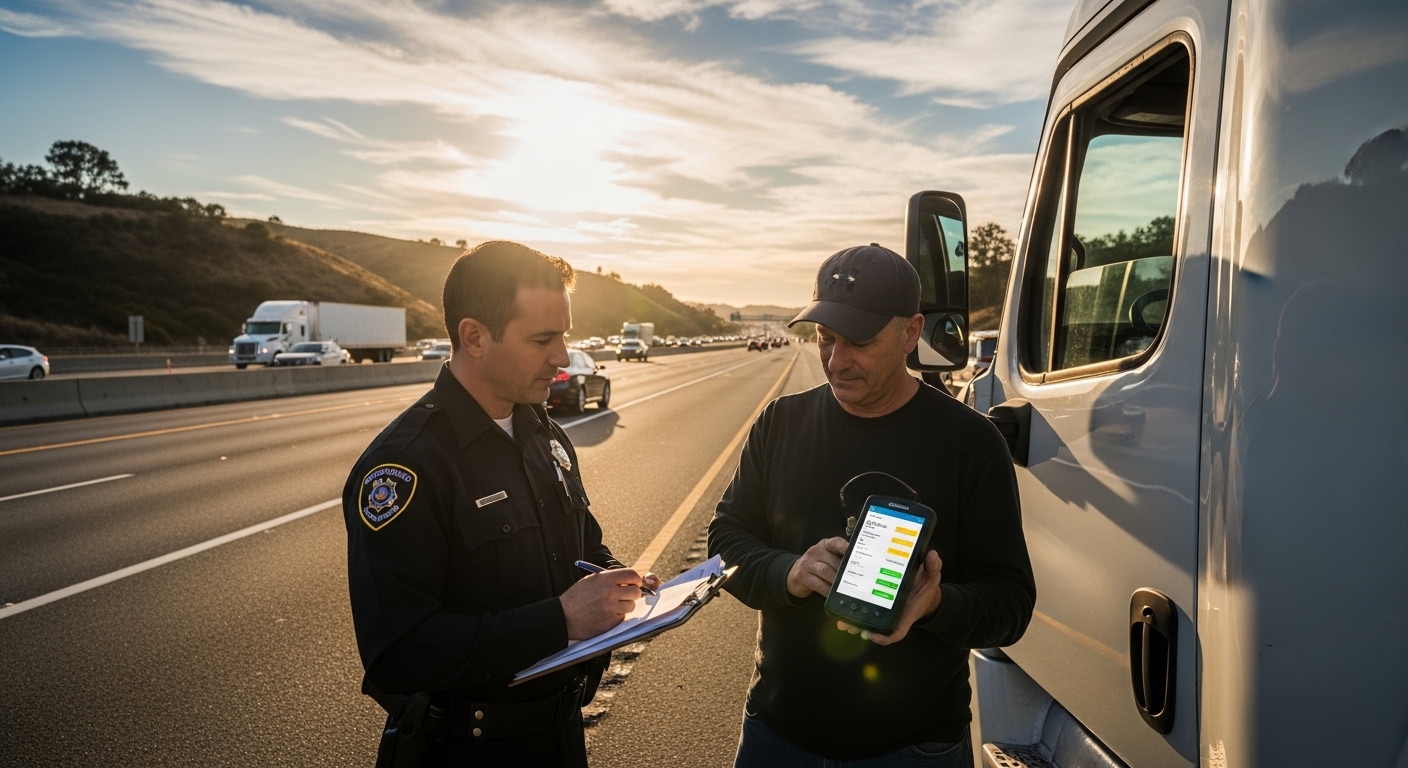
ELD evidence can affect more than fault. It can also affect the value of a claim. If the data shows that a driver violated hours-of-service rules, the case may involve more than ordinary negligence.
The trucking company may share responsibility if it ignored warning signs. A carrier may have failed to monitor hours, pushed unsafe schedules, hired careless drivers, or used poor safety systems. Those company-level failures can matter in serious injury claims.
This issue also connects to your guide on how to prove fault in a truck accident in Orange County. ELD records may help prove what the driver did before the crash. They may also reveal what the company allowed.
Surveillance footage can add another layer. Your article on surveillance cameras in truck accident investigations pairs well with this topic. Video can show whether the driver braked late, drifted, sped, or failed to react.
Victims should also review your article on what to do after a truck accident in Orange County. Early steps can protect medical records, scene evidence, witness information, and electronic proof.
Final thoughts
An ELD truck accident claim can reveal more than driving time. It can uncover fatigue, schedule pressure, missing records, weak supervision, and carrier safety failures. When a revoked or noncompliant device appears in the case, the investigation should go deeper.
Orange County truck accident victims should not rely only on the police report or the carrier’s first explanation. The real story may sit in electronic logs, GPS records, dispatch messages, inspection reports, and company safety files.
For official background, readers can review the FMCSA Electronic Logging Devices page. It explains how ELDs support hours-of-service recording for commercial drivers.
This article is for general educational purposes only. It is not legal advice. Anyone injured in a truck crash should speak with a qualified attorney about evidence, deadlines, liability, and legal options.