
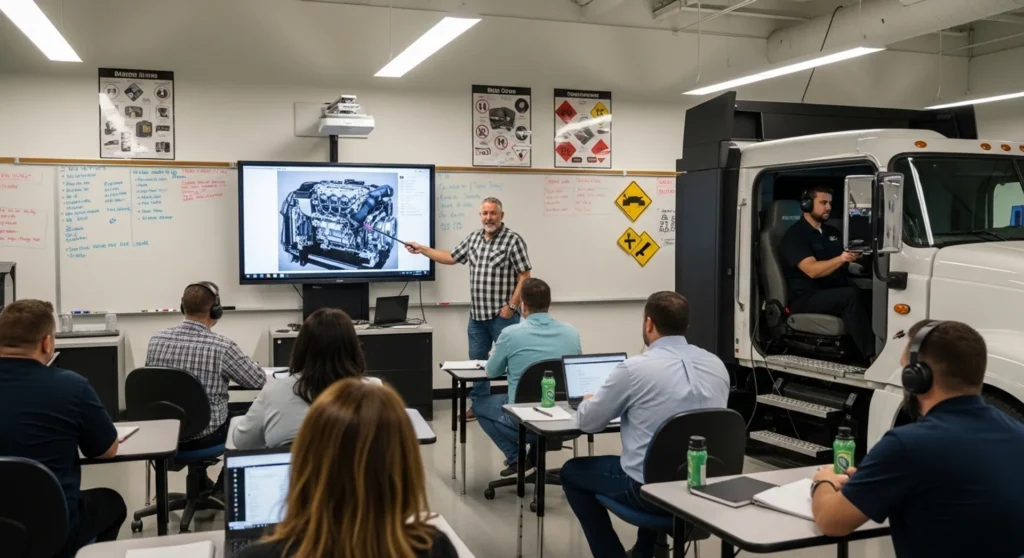
Truck accident cases are rarely just about the few seconds before impact. In many of the most serious crashes, the deeper story starts much earlier with hiring, training, qualification, and supervision. That is exactly why FMCSA CDL school crackdown truck accident claim on noncompliant CDL training schools matters so much for injury claims in Orange County.
When a commercial driver is undertrained, rushed through instruction, or certified by a provider that never met basic safety standards, the danger does not stay inside the classroom. It shows up on public roads. A driver who never learned proper braking distance, turning space, blind-spot awareness, cargo basics, or inspection routines can create a major risk for everyone nearby.
For injured victims, this issue can be bigger than it looks. A weak training history may help explain how the crash happened, why the trucking company should have caught the problem sooner, and why liability may extend beyond the driver alone. In the right case, that can change the value and direction of the claim.
Why the 2026 CDL School Crackdown Matters After a Truck Crash
In 2026, federal officials publicly announced an aggressive effort against CDL schools and training providers that were allegedly failing to meet safety rules. That development matters because truck accident cases often turn on whether the driver was properly prepared before getting behind the wheel of a commercial vehicle.
If a driver came through a provider with serious deficiencies, that may become relevant in several ways. It may support negligent training arguments, strengthen claims of negligent hiring or retention, and raise questions about whether the carrier relied on a training pipeline it should never have trusted.
For a victim in Orange County, the practical takeaway is simple. A truck crash may not be just a one-driver mistake. It may be the final result of failures involving a school, a training provider, a safety department, or a motor carrier that put speed and volume ahead of public safety.
How Training Failures Can Show Up in Real Truck Accident Cases
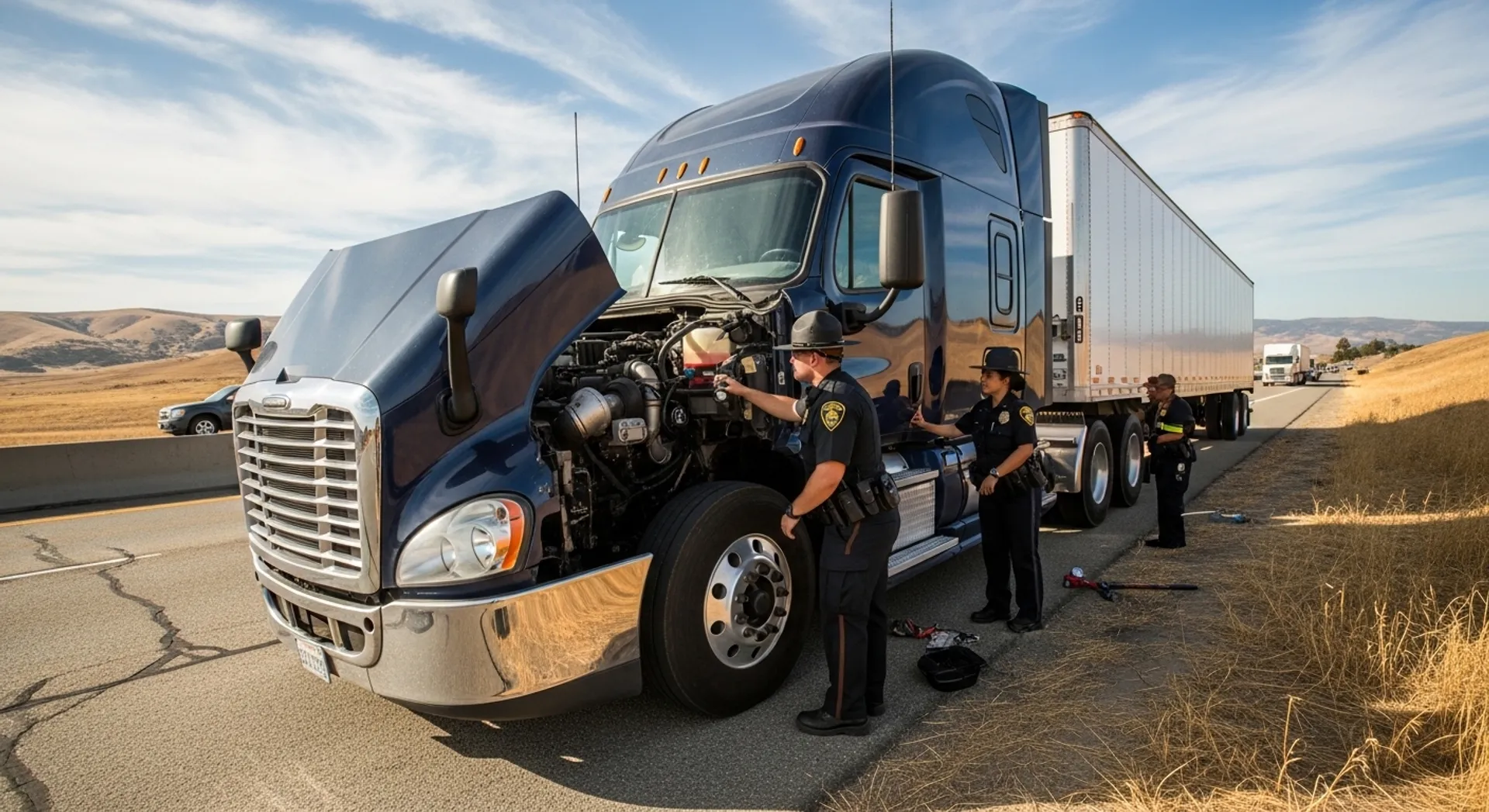
Poor training is not always obvious on day one, but it often leaves fingerprints. The crash itself may reflect gaps in skill, judgment, or safety habits that a properly trained commercial driver should have understood.
Common crash patterns linked to poor training
Training-related failures can appear in many forms, including:
- rear-end collisions caused by poor stopping-distance judgment
- wide-turn and squeeze accidents involving passenger vehicles
- unsafe lane changes and blind-spot collisions
- rollovers tied to speed, load shift, or poor curve handling
- backing accidents in loading zones, parking lots, or yards
- inspection-related failures involving brakes, tires, lights, or coupling systems
These issues do not automatically prove negligent training, but they can create the roadmap for an investigation. Once the records are obtained, the case may reveal that the driver lacked proper entry-level instruction, failed required assessments, or was pushed onto the road before being truly ready.
Why the carrier may also be responsible
Trucking companies do not get a free pass just because a school trained the driver first. Carriers still have obligations when they hire, qualify, monitor, and supervise drivers. If a company ignored warning signs, failed to review training history, skipped internal road testing, or allowed weak safety practices to continue, it may share liability.
That matters for claim value
In many truck accident cases, company-level negligence matters because the employer may have more control over records, broader legal duties, and larger insurance coverage than the driver alone. That can make a major difference when a crash causes catastrophic injuries, permanent disability, or wrongful death.
What Evidence Can Help Prove a Training-Related Failure
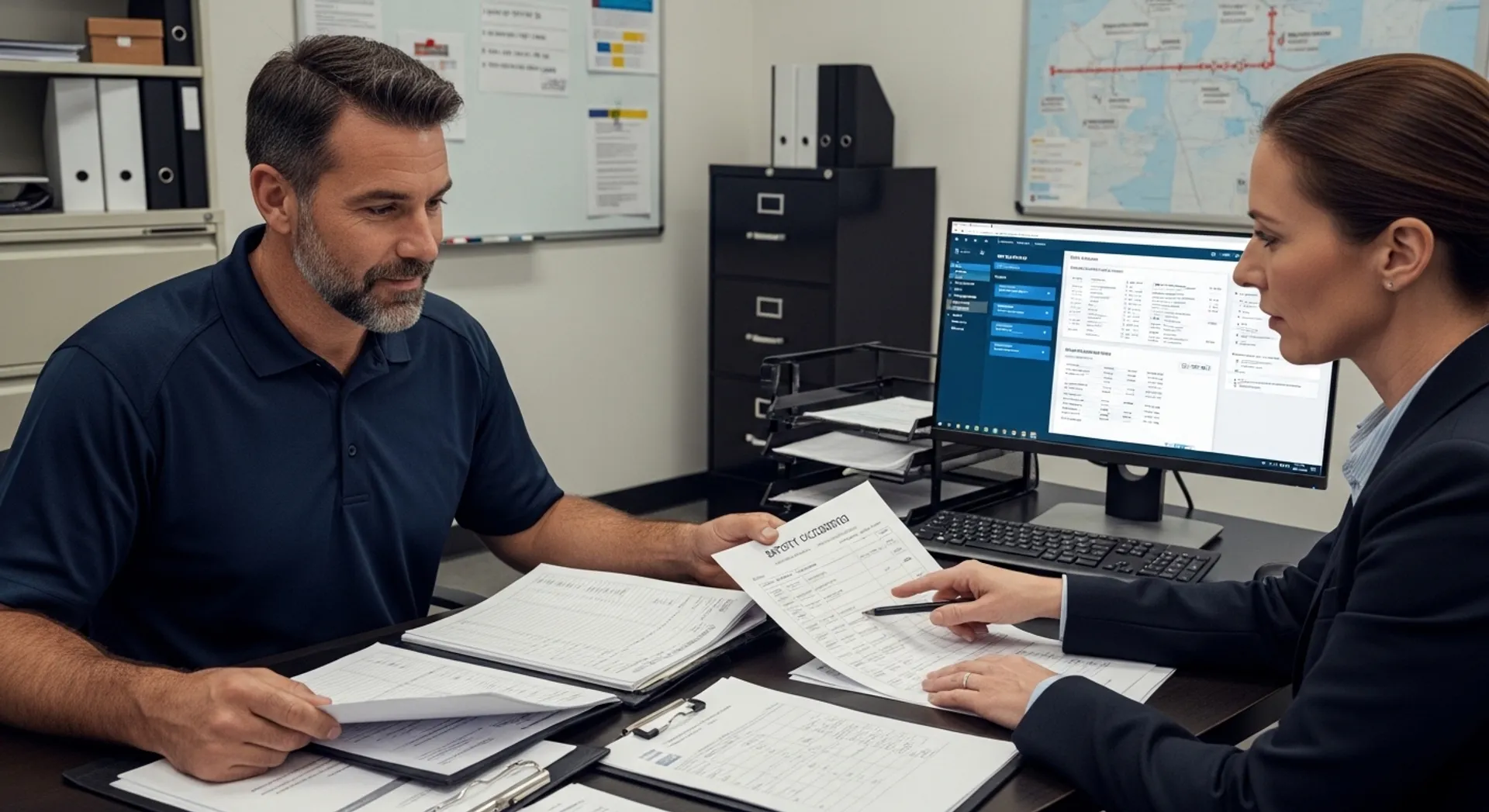
These claims are evidence-driven. You cannot assume poor training just because the collision was serious. The case has to be built through records, testimony, and documentation that shows what the driver was taught, what the company knew, and what should have happened before the crash ever occurred.
Useful records in a negligent training investigation
- driver qualification files
- entry-level driver training records
- CDL school and instructor information
- carrier hiring files and onboarding materials
- road tests and skill evaluations
- disciplinary records and prior incident history
- dispatch communications
- electronic logging and telematics data
- inspection reports and maintenance records
- dashcam, bodycam, or surveillance footage
These materials often work best when viewed together. A crash alone may suggest driver error, but a crash plus weak training records plus a bad safety history can paint a much stronger liability picture.
For internal linking, this topic pairs naturally with How Negligent Truck Driver Training Can Affect an Orange County Truck Accident Claim in 2026, The Role of Truck Inspection Reports in Truck Accident Cases, and The Role of Surveillance Cameras in Truck Accident Investigations.
How the Defense May Try to Downplay the Training Issue
Insurance companies and defense lawyers usually do not want the case to widen beyond the driver. Once training failures enter the picture, the claim may become more dangerous for the carrier. That is why they often try to narrow the story.
Common defense arguments
You may hear arguments like these:
- the crash was caused by traffic conditions, not training
- the driver held a valid CDL, so training should not matter
- the collision involved a momentary mistake anyone could have made
- there is no proof that a training defect directly caused the impact
Some of those arguments may carry weight in a weak case. But when the evidence shows that the driver was underprepared, the provider was noncompliant, or the carrier ignored obvious red flags, training can become one of the most important issues in the lawsuit.
Why timing matters
Records can disappear, witnesses can become harder to find, and carriers can move quickly after a serious crash. Early preservation work matters. That may include sending spoliation letters, demanding qualification files, identifying the training provider, and preserving video and electronic data before it is lost.
What Victims Should Do After a Serious Orange County Truck Accident
If you suspect the driver may have been poorly trained, do not try to prove that by guesswork. Focus first on protecting your health and your evidence.
Practical steps that help protect the claim
- get medical care immediately
- save photos, video, and witness contact information
- avoid casual recorded statements to insurance adjusters
- preserve receipts, treatment records, and time missed from work
- act quickly so legal counsel can seek records before they disappear
This topic also links well to What to Do If You’re Injured in a Truck Accident While Driving in Orange County and How to Prove Fault in a Truck Accident in Orange County.
Final Thoughts
FMCSA’s 2026 CDL school crackdown matters because it puts a spotlight on a truth truck accident victims have long faced: unsafe commercial driving can start long before a crash. If a driver was trained by a provider that cut corners, used unqualified instructors, or failed basic safety standards, that may become highly relevant to an Orange County injury claim.
In the right case, the training history may help explain how the collision happened, why the trucking company should have intervened sooner, and which parties may be legally responsible. That is why negligent training is not just a background issue. It can be one of the strongest paths to proving fault and pursuing full compensation.
For official background, readers can review the U.S. Department of Transportation announcement on the 2026 CDL school crackdown.