
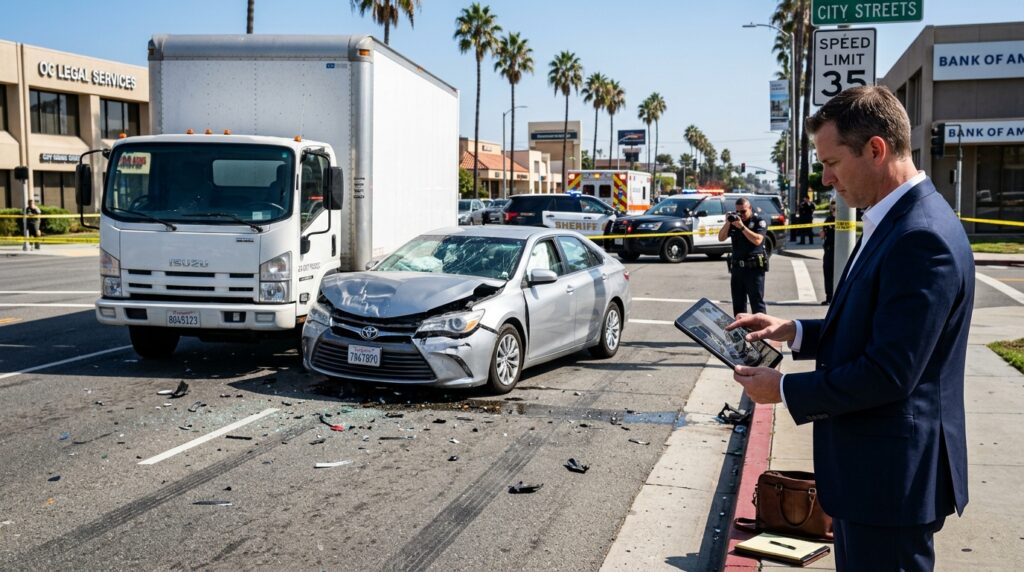
A medium-duty truck accident can cause serious injuries even when the vehicle is not a full-size semi-truck. Many people picture tractor-trailers when they hear the words “truck accident,” but box trucks, delivery vans, bucket trucks, utility trucks, and larger work pickups can also create devastating crashes. These vehicles often move through crowded city streets, tight parking lots, warehouse zones, apartment complexes, and busy Orange County freeways.
Medium-duty trucks matter because they sit between ordinary passenger vehicles and heavy commercial trucks. They may not look as intimidating as an 18-wheeler, but they still weigh far more than a regular car. Their size, blind spots, stopping distance, cargo weight, and work schedules can turn a simple traffic mistake into a life-changing collision.
In 2026, this topic deserves more attention because commercial delivery traffic continues to grow. More packages, food deliveries, contractor vehicles, utility fleets, and local freight routes mean more medium-duty vehicles share the road with drivers, cyclists, and pedestrians. For injured victims, the challenge is clear: proving what went wrong and identifying every responsible party.
If you need a broader foundation, read our guide on how to prove fault in a truck accident in Orange County. This article focuses specifically on medium-duty trucks and why their claims require careful evidence review.
Why Medium-Duty Truck Accidents Are Different
A medium-duty truck may include a box truck, city delivery van, bucket truck, flatbed work truck, refrigerated delivery truck, or large commercial pickup. These vehicles often operate under time pressure. Drivers may make frequent stops, back into loading areas, double-park near businesses, or enter residential streets where large trucks have limited room to maneuver.
That daily operating pattern creates risks that differ from long-haul trucking. A semi-truck crash may involve interstate freight, hours-of-service records, and highway fatigue. A medium-duty truck accident may involve rushed deliveries, poor parking decisions, unsafe backing, overloaded cargo, weak training, or a company that treats commercial driving like an ordinary job.
What counts as a medium-duty truck?
Medium-duty trucks generally fall into Class 3 through Class 6. These vehicles can include box trucks, city delivery vans, utility trucks, and other commercial vehicles that weigh more than typical passenger cars. The weight difference matters because heavier vehicles need more space to stop and can hit with much greater force.
FMCSA explains medium-duty trucks as Class 3–6 trucks with a gross vehicle weight rating from 10,001 to 26,000 pounds. Readers can review the official definition here: FMCSA Crash Causal Factors Program definitions.
Box trucks can create major blind spot problems
Box trucks often have large rear cargo areas and limited rear visibility. If mirrors, backup cameras, or driver attention fail, a backing crash can injure pedestrians, cyclists, delivery workers, or nearby drivers. Tight parking lots and loading docks make this risk worse.
Blind spots can also create side-swipe crashes. A driver may drift into another lane, turn wide at an intersection, or miss a smaller vehicle beside the truck. When that happens, the crash report may not tell the full story. Camera footage, witness statements, and vehicle damage patterns can help explain how the impact occurred.
Why delivery vehicle claims can become complicated
Delivery vehicle claims often involve more than one insurance policy. The driver may work directly for a company, operate as an independent contractor, drive for a subcontractor, or use a vehicle owned by another business. That structure can create finger-pointing after a crash.
The company may blame the driver. The driver may blame the schedule. A contractor may deny control. An insurer may argue that the vehicle was outside the correct business use at the time of the crash. Victims should not accept the first explanation without reviewing the records.
Route pressure can affect driver behavior
Many medium-duty truck drivers work under tight schedules. A driver may need to finish a delivery route, reach a job site, or complete multiple service calls. When companies create unrealistic expectations, drivers may speed, skip inspections, park unsafely, or rush through turns and backing maneuvers.
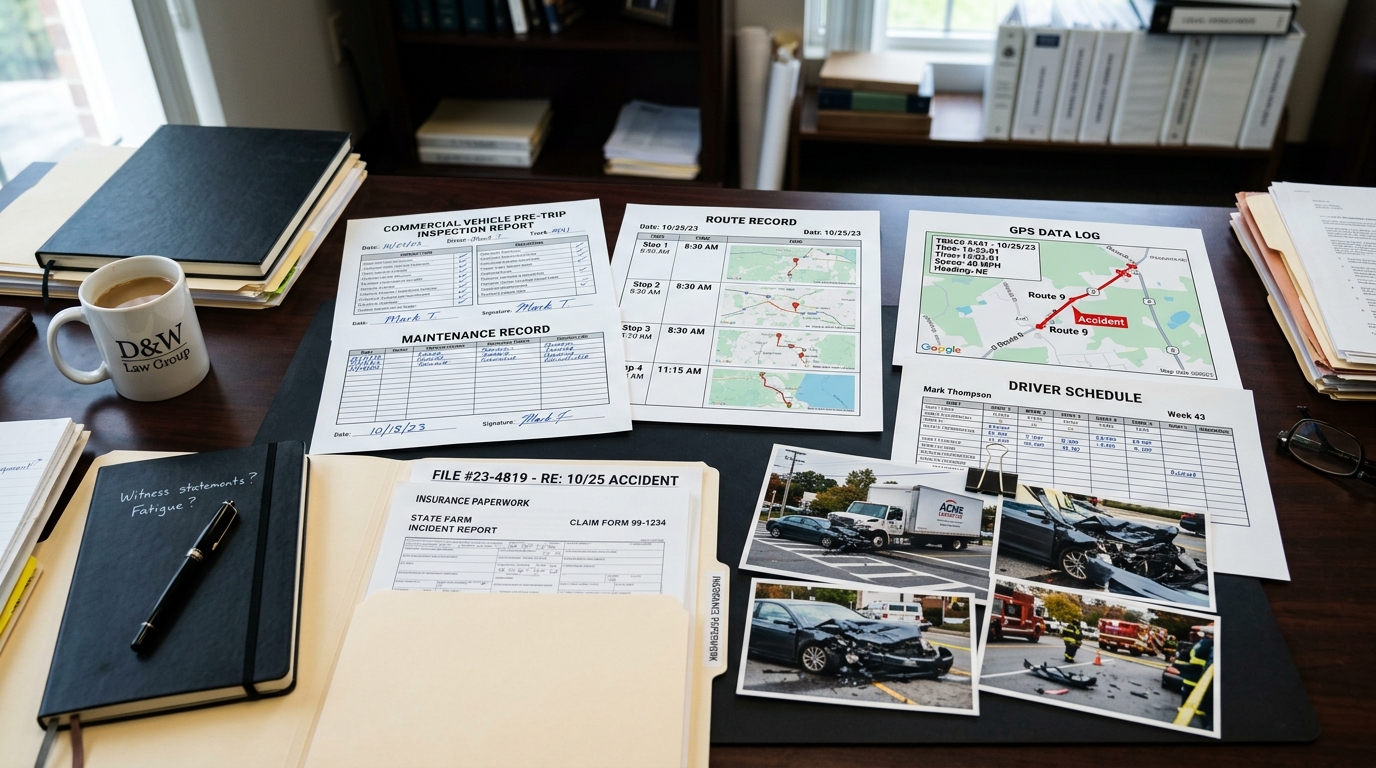
Those facts can matter in a claim. Dispatch records, route logs, GPS data, time stamps, app messages, and delivery scans may show whether the company pushed the driver into unsafe choices. If poor training played a role, our article on negligent truck driver training in Orange County claims may also help.
Evidence That Can Strengthen A Medium-Duty Truck Accident Claim
A strong medium-duty truck accident claim needs more than basic vehicle photos. Victims should look at the driver, company, vehicle, route, cargo, maintenance history, and crash scene. These cases can look simple at first, but commercial records may reveal deeper safety failures.
Important evidence may include photos, video, police reports, witness statements, medical records, repair estimates, inspection logs, maintenance files, driver schedules, GPS records, route data, cargo documents, and company safety policies. When the claim involves a business vehicle, those records can help show whether the company acted responsibly before the crash.
Company and vehicle records may reveal negligence

Medium-duty trucks still need proper inspection and maintenance. Brake problems, tire issues, broken lights, steering defects, unsafe mirrors, and worn equipment can all contribute to crashes. If a company ignored known problems, maintenance records may support the victim’s claim.
Driver records can also matter. A company should know whether its drivers have proper training, valid licenses, clean safety histories, and enough instruction for the vehicle they operate. A driver who handles a heavy box truck through Orange County traffic needs more than basic driving experience.
Inspection reports can connect the crash to poor maintenance
Inspection reports help show whether the truck was safe before the crash. They may reveal brake issues, tire wear, lighting problems, cargo securement concerns, or repairs that the company delayed. If the same problem appears in earlier records, the victim may argue that the company had warning signs and failed to act.
For more background, read our article on the role of truck inspection reports in truck accident cases. Inspection evidence can be especially useful when a company tries to blame only the driver.
Photos, video, and medical records still matter
After any truck crash, the injured person should get medical care first. Once it is safe, photos and videos can help preserve the scene. Useful images may show vehicle positions, damage, skid marks, lane markings, traffic signs, company logos, DOT numbers, cargo conditions, weather, and nearby cameras.
Medical records connect the crash to the injuries. Insurance companies may argue that the impact was minor or that symptoms came from another cause. Treatment records, diagnostic tests, therapy notes, prescriptions, work restrictions, and pain documentation can help answer those arguments.
A medium-duty truck accident can leave victims facing medical bills, missed work, pain, and long recovery periods. The vehicle may not be a semi-truck, but the claim still deserves a serious investigation. Box trucks and delivery vehicles can cause severe harm when companies cut corners on training, maintenance, scheduling, or supervision.
If you suffered injuries in an Orange County crash involving a box truck, delivery van, utility vehicle, or other medium-duty commercial truck, act quickly. Get medical care, document the scene, save every record, avoid rushed insurance statements, and make sure the company’s vehicle and route evidence gets preserved before it disappears.