
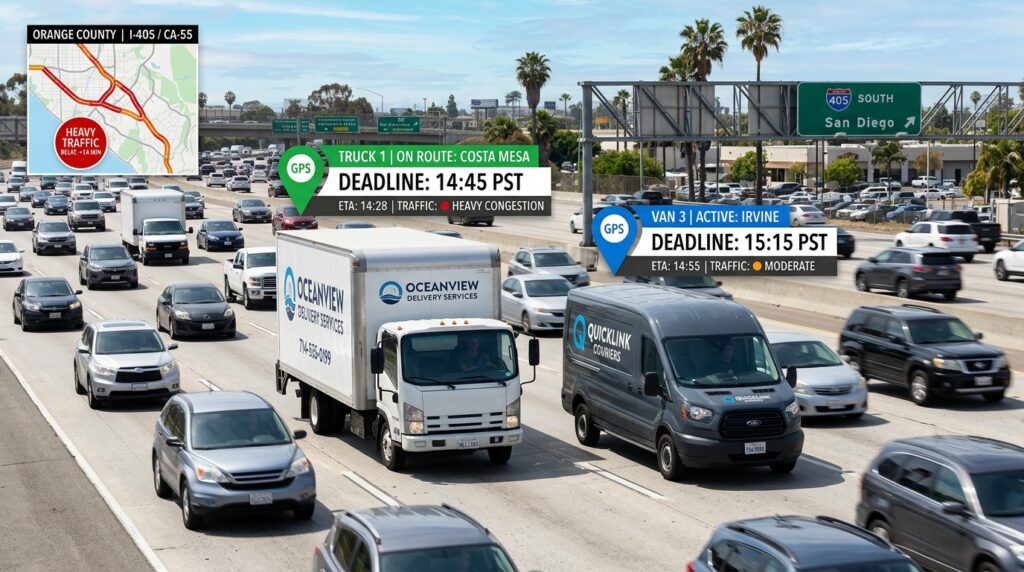
Same-day delivery truck accidents are becoming a more important issue in Orange County as consumers expect faster shipping, tighter delivery windows, and real-time package tracking. What used to be a simple delivery route may now involve dozens of stops, app-based dispatch instructions, GPS monitoring, customer deadlines, warehouse timing, and pressure to complete a route before the end of the day.
That pressure can matter after a crash. A delivery truck accident may involve a box truck, cargo van, step van, rented truck, pickup with a trailer, or larger commercial vehicle. The vehicle may not look like a traditional big rig, but the legal issues can still be serious. Delivery vehicles are often larger, heavier, and harder to stop than ordinary passenger cars. When they are operated carelessly in traffic, parking lots, neighborhoods, business districts, or freeway corridors, the injuries can be severe.
In Orange County, same-day and last-mile delivery vehicles may travel through busy areas near warehouses, shopping centers, residential streets, schools, construction zones, and major freeways such as I-5, I-405, SR-55, SR-57, and SR-91. A crash may happen because a driver was speeding, distracted by a route device, parked unsafely, made a sudden turn, backed without checking blind spots, or rushed through traffic to meet a delivery deadline.
This article explains how same-day delivery truck accidents happen, why delivery pressure can affect liability, and what evidence may help support an Orange County injury claim.
Why Same-Day Delivery Truck Accidents Are Becoming a Bigger Legal Issue
Fast delivery has changed the way commercial vehicles operate. Drivers may be assigned dense routes with many stops in a limited time. A route may include homes, apartments, businesses, gated communities, narrow streets, loading zones, and high-traffic intersections. The driver may need to scan packages, follow GPS directions, respond to dispatch updates, take proof-of-delivery photos, and move quickly between stops.
None of that excuses unsafe driving. A delivery company, carrier, contractor, or driver still has a responsibility to use reasonable care. If the delivery schedule is unrealistic or if the company rewards speed over safety, that may become relevant in a personal injury claim. The key question is not only whether the driver made a mistake, but also whether the delivery system created unsafe conditions before the crash happened.
Fast delivery pressure can affect driver behavior
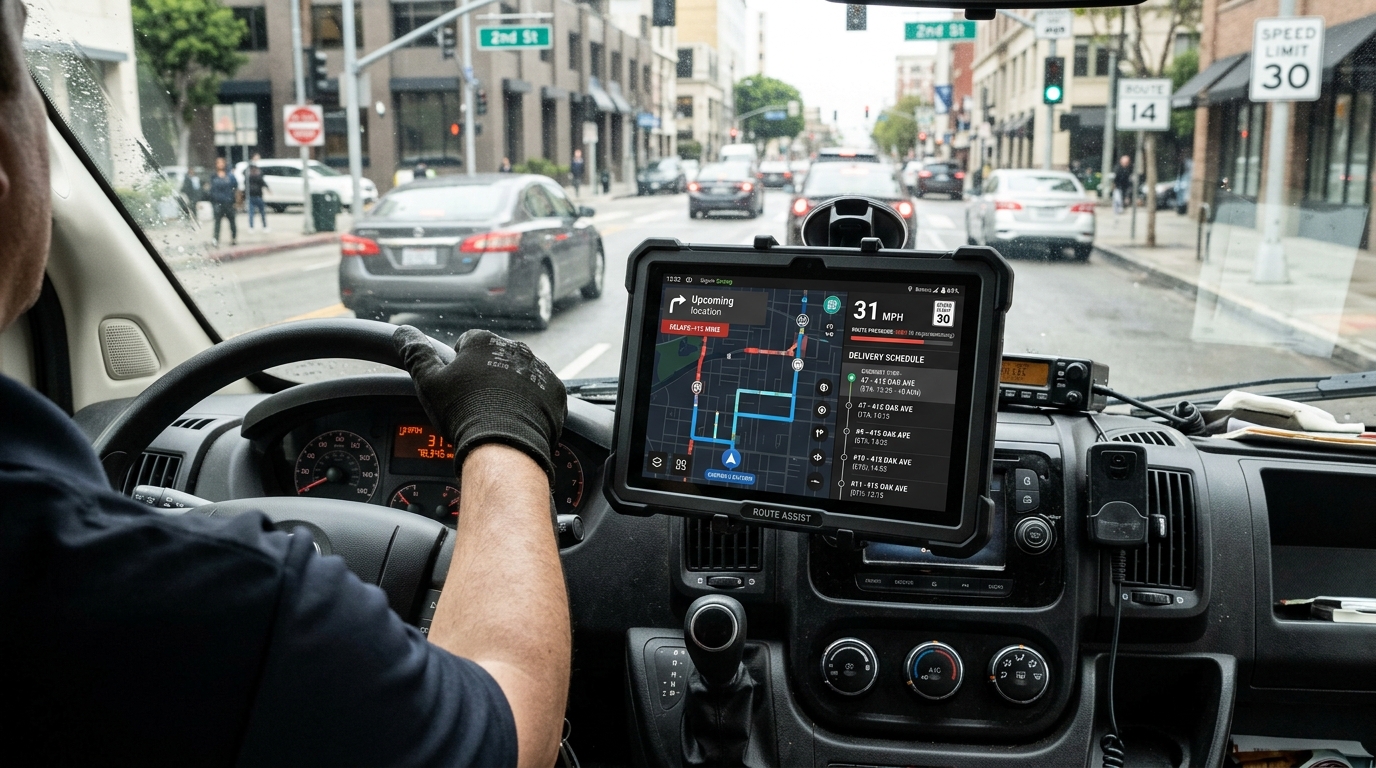
Drivers under heavy schedule pressure may take risks they would not normally take. They may follow too closely, accelerate through yellow lights, stop in unsafe locations, double park, block bike lanes, ignore blind spots, rush turns, or drive while distracted by delivery apps and navigation screens. These small decisions can become dangerous when the vehicle is large, loaded with packages, or operating in crowded traffic.
Speed is especially important. A delivery vehicle that is running late may not need to be dramatically over the limit to become dangerous. Even modest speed increases can reduce reaction time and increase stopping distance. If a driver is moving through a neighborhood, parking lot, school zone, or congested commercial area, rushing can put pedestrians, cyclists, motorcyclists, and other drivers at risk.
Speeding, unsafe stops, and tight delivery windows
Many delivery crashes happen during basic route movements. A driver may stop suddenly to find an address. A box truck may block a lane while unloading. A driver may reverse in a driveway or apartment complex without a spotter. A cargo van may cut across traffic after missing a turn. A truck may pull away from the curb without checking mirrors.
In a claim involving same-day delivery truck accidents, timing evidence can be important. The driver’s route schedule, dispatch messages, GPS history, delivery app logs, and stop-by-stop records may show whether the driver was behind schedule. If the driver was expected to complete too many stops in too little time, the company’s policies may become part of the investigation.
Driver classification and company control matter
Delivery cases can become complicated because the driver may be an employee, independent contractor, subcontractor, gig worker, or driver for a third-party delivery provider. The company whose package was being delivered may not be the same company that owned the vehicle or hired the driver. Several companies may be involved in the route, including shippers, brokers, logistics providers, fleet owners, and last-mile delivery contractors.
That does not automatically prevent a claim. The legal issue often turns on control. Who assigned the route? Set the delivery window? Trained the driver? Owned or leased the vehicle? Who monitored GPS performance? Who had authority to discipline, remove, or reward the driver? These facts may help determine whether more than one party may be responsible.
This is why understanding liability in truck accident cases is important. A delivery crash may look simple at first, but the responsible parties may include the driver, delivery company, vehicle owner, maintenance provider, warehouse operator, or another motorist.
The vehicles involved are not always tractor-trailers
Many people think of truck accident claims as crashes involving 18-wheelers. But same-day delivery crashes often involve smaller commercial vehicles. These may include cargo vans, box trucks, refrigerated delivery trucks, flatbeds, rented moving trucks, and step vans. They may operate in tight areas where larger tractor-trailers rarely go.
These vehicles can still cause serious injuries. A loaded box truck can take longer to stop than a passenger car. A cargo van may have large blind spots. A delivery truck may have worn brakes, poor visibility, unsecured cargo, or repeated maintenance problems. A driver may not have enough training for the size and weight of the vehicle, especially if the company uses temporary drivers during peak demand.
Box trucks, cargo vans, and rented vehicles can still cause serious injuries
The injury risks depend on the crash facts. A pedestrian hit by a delivery vehicle may suffer fractures, head trauma, spinal injuries, or internal injuries. A cyclist or motorcyclist may be thrown into traffic. A passenger vehicle hit by a loaded box truck may sustain major damage. A crash involving a truck backing up can cause severe crush injuries.
Vehicle condition also matters. Delivery vehicles may run long daily routes with frequent stopping, turning, braking, and reversing. That kind of use can wear down brakes, tires, mirrors, lights, cameras, and backup warning systems. If a company failed to inspect or maintain the vehicle, the case may involve more than driver negligence.
For related evidence issues, your article on surveillance cameras in truck accident investigations is a useful internal link. Delivery truck crashes often happen near homes, businesses, apartment complexes, warehouses, and intersections where camera footage may exist.
Evidence That Can Prove Pressure, Negligence, and Shared Liability
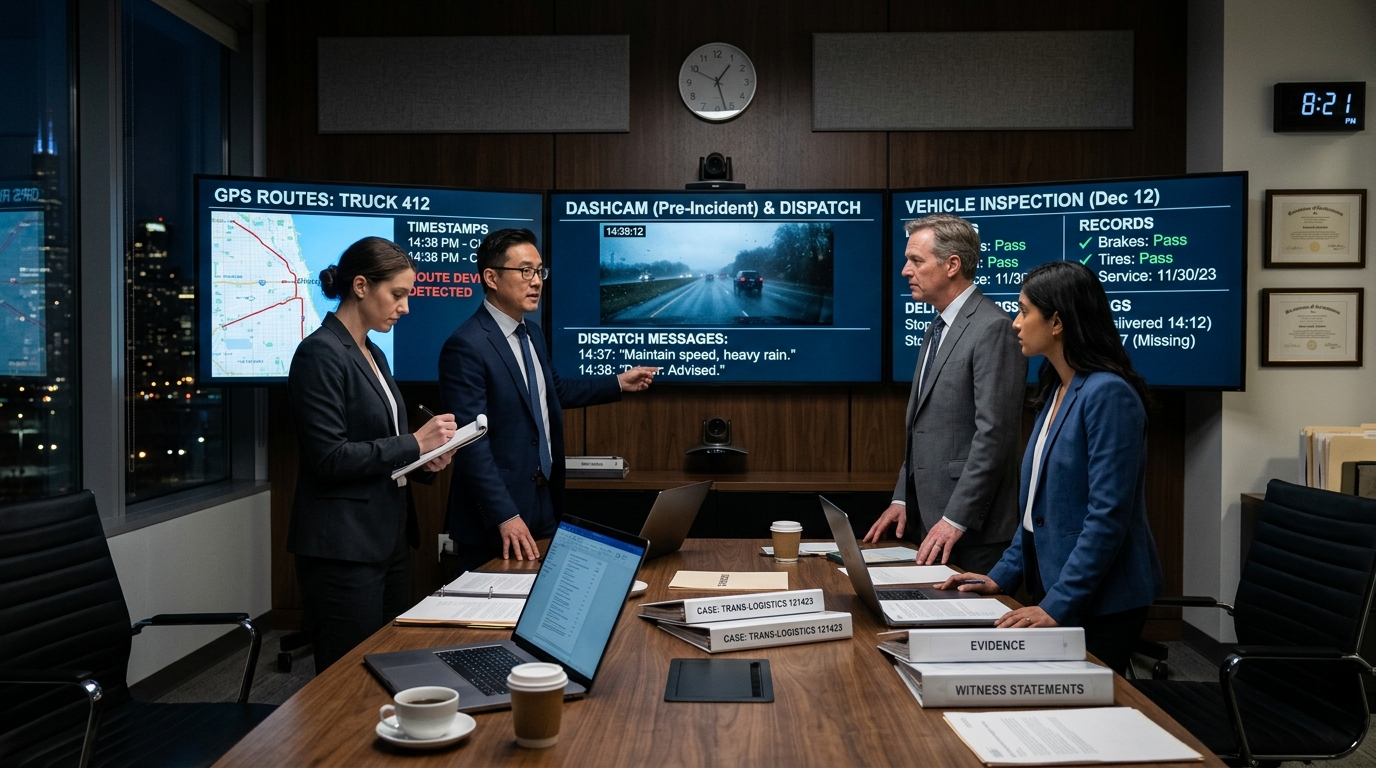
Strong evidence can change a delivery truck accident claim. Insurance companies may argue that the victim caused the crash, that the driver acted alone, or that the company had no control over the driver. Records can challenge those arguments. The goal is to show what happened, why it happened, and whether the crash was part of a larger pattern of unsafe delivery practices.
Useful evidence may include GPS route history, delivery timestamps, dispatch messages, driver app data, proof-of-delivery photos, dashcam footage, telematics records, vehicle inspection reports, maintenance records, driver training files, hiring records, delivery contracts, warehouse timing records, and insurance documents. If a driver was fatigued, rushed, or pressured to violate safety rules, hours-of-service and dispatch evidence may also matter.
For official safety background, readers can review the Federal Motor Carrier Safety Administration’s hours-of-service information. FMCSA also explains driver coercion rules, which may be relevant when a motor carrier, shipper, receiver, or transportation intermediary pressures a driver to operate in violation of safety regulations.
Records to preserve after a same-day delivery crash
Preservation should happen quickly. Delivery data can be stored in apps, fleet systems, cloud dashboards, dispatch platforms, dashcams, and handheld scanners. Some information may be overwritten, edited, deleted, or lost if no one acts. A preservation letter may be needed to demand that all relevant parties keep the driver’s route records, messages, video, GPS data, vehicle records, and company policies.
Your article on truck driver fatigue accident claims in Orange County also connects to this issue. Same-day delivery pressure may combine with long shifts, skipped breaks, repeated stops, and late-day fatigue. If a driver was tired, behind schedule, and distracted by route instructions, several pieces of evidence may point toward preventable negligence.
Medical evidence is just as important. Victims should document emergency care, follow-up appointments, imaging results, therapy, lost wages, pain levels, mobility problems, and future treatment needs. A strong claim should connect the crash evidence to the real harm suffered by the injured person.
Why victims should not rely on the first insurance story
The first insurance explanation is often incomplete. An adjuster may say the delivery driver was an independent contractor, the victim entered the lane suddenly, the crash was unavoidable, or the company had no responsibility. Those statements should not be accepted without evidence. GPS logs, delivery records, dashcam footage, and dispatch messages may tell a different story.
Same-day delivery truck accidents require careful investigation because the crash may be caused by a combination of driver negligence and company-level pressure. A rushed driver may be the person behind the wheel, but the delivery system may reveal why the risk was created in the first place.
General information only. This article is for educational purposes and is not legal advice. Delivery truck accident claims depend on specific facts, evidence, deadlines, insurance coverage, and applicable law. Speak with a licensed attorney about a specific Orange County truck accident case.