
Introduction
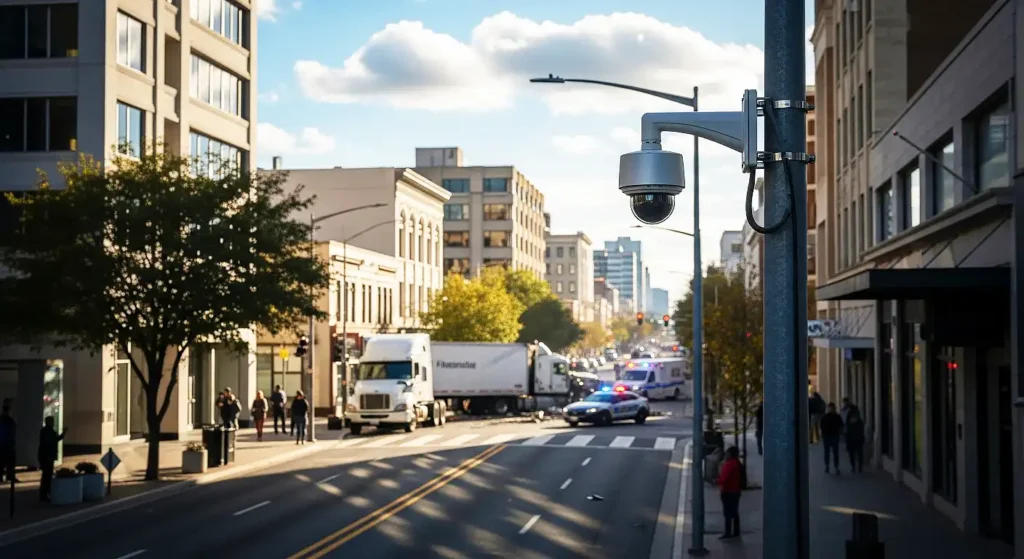
Truck accidents are some of the most serious and complicated incidents on the road. When they occur, they can lead to severe injuries or even fatalities. For victims, the path to justice and compensation often relies on clear evidence of what happened. One of the most valuable forms of evidence in truck accident investigations comes from surveillance cameras. Whether it’s footage from traffic cameras, business security cameras, or dash cams on trucks, this video evidence can be pivotal in establishing fault and ensuring that victims receive the compensation they deserve.
In this post, we’ll explore the crucial role that surveillance cameras play in truck accident investigations, how to obtain this footage, its legal implications, and how it can be used to enhance your case.
1. Types of Surveillance Cameras in Truck Accident Investigations
When it comes to surveillance footage, there are several types of cameras that may capture footage of the accident or its surrounding circumstances. Understanding the different types of surveillance cameras is essential for anyone involved in a truck accident case, whether they are the victim or the defendant.
1.1 Traffic Cameras
Traffic cameras are installed by local governments, often at major intersections, highways, and on ramps. These cameras are designed to monitor traffic flow and ensure public safety. In truck accident investigations, traffic cameras are invaluable, as they often record real-time traffic conditions and incidents.
Traffic cameras can show:
- The sequence of events leading up to the accident
- Vehicle speeds
- The actions of the truck driver and other vehicles involved
Many cities and states have systems that allow law enforcement and accident investigators to access and view this footage, which can be a game-changer in proving fault.
1.2 Business Security Cameras
Businesses, particularly those located near busy roads or intersections, often have surveillance systems monitoring parking lots, streets, and sidewalks. These cameras can capture accidents that occur in the vicinity of their premises.
For example, if a truck accident occurs near a store or gas station, the footage from their security cameras may provide:
- A broader view of the accident scene
- Witnesses or additional vehicles involved that might not have been seen from traffic cameras
- A clear picture of the environment, such as road conditions, construction zones, or weather conditions
In many cases, businesses are legally required to keep footage for a certain amount of time, and obtaining this footage early on can provide crucial evidence for your case.
1.3 Dash Cams on Trucks
Dash cams are becoming increasingly common on trucks, especially for fleet vehicles. These cameras are mounted on the dashboard and record everything happening in front of the truck. They can capture critical moments leading up to the accident, including the truck driver’s actions, other drivers’ behavior, and road conditions.
Dash cams often record:
- Speeding or unsafe driving behavior by the truck driver
- Sudden lane changes or failure to signal
- The exact moment of impact, which can be vital in determining how the accident occurred
Dash cam footage can offer a first-hand, direct view of the incident, often making it one of the most reliable sources of evidence in truck accident cases.
2. Importance of Surveillance Footage in Establishing Fault
In truck accident cases, establishing fault is crucial for determining who is liable for damages. Surveillance footage is often the most direct and clear-cut evidence that can help establish fault.
 2.1 Objective and Unbiased Evidence
Unlike witness statements, which can be influenced by perception, memory, or bias, surveillance footage provides an objective, real-time record of the incident. This can be particularly useful when there are conflicting accounts of the accident.
For instance, if one party claims the truck driver was speeding and another says the other driver was at fault, surveillance footage can show the exact speeds and actions of both parties involved. It provides irrefutable evidence that can’t be distorted or misinterpreted, making it an essential part of the investigation process.
2.2 Establishing a Clear Timeline
One of the main advantages of surveillance footage is the ability to establish a clear timeline of events. Time-stamped footage can show:
- The exact moment the accident occurred
- The speed at which vehicles were traveling
- The precise actions of the drivers involved
In a case where there’s ambiguity about the sequence of events, having a video timeline can help clear up any confusion and strengthen the case for either side.
2.3 Identifying Contributing Factors
Surveillance footage doesn’t just show the crash itself; it can also capture external factors that may have contributed to the accident. For example, footage from a traffic camera might show:
- Wet road conditions after a rainstorm
- Construction zones that led to blocked lanes or debris on the road
- Traffic signals or signs that may have been ignored or malfunctioned
These contributing factors can be critical in proving negligence or understanding how the accident occurred. In some cases, it may not just be the truck driver who is at fault; third parties like other drivers, local governments, or even manufacturers could share some liability.
 3. Challenges in Obtaining Surveillance Footage
While surveillance footage can be invaluable, there are several challenges involved in obtaining it. Investigators must act quickly and be prepared to navigate legal and technical obstacles.
3.1 Time Sensitivity
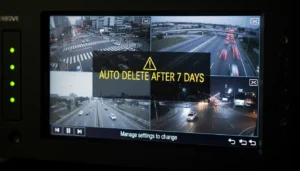
Surveillance footage, especially from business security cameras or traffic cameras, is often overwritten after a short period of time. Depending on the system, footage might only be stored for a few days or weeks before being deleted or replaced by new footage.
For this reason, it’s critical to act quickly after a truck accident. Investigators must request the footage as soon as possible to ensure it is preserved. In some cases, there may be additional costs or administrative hurdles involved in obtaining and preserving the footage, so working with legal professionals early on can help secure this important evidence.
3.2 Legal Access to Footage
Surveillance footage, particularly from business cameras, is often privately owned. Accessing this footage may require permission from the property owner or a subpoena if the footage is critical to the case.
For example, if a business’s security camera captured footage of a truck accident on a nearby highway, the business owner might need to be contacted and asked for access to the footage. If the business is unwilling to release the footage, legal action may be necessary to obtain it.
3.3 Quality and Clarity of Footage
Not all surveillance footage is created equal. While some cameras offer high-definition video that clearly shows the accident and its details, others may have low resolution, poor lighting, or unclear angles. These issues can make the footage difficult to use in an investigation.
When requesting footage, it’s important to understand the quality of the camera system in question. High-quality, clear footage is ideal, but if the footage is blurry or unclear, it may be less helpful in proving your case.
4. Legal Considerations in Using Surveillance Footage
When using surveillance footage in a truck accident case, there are several legal considerations to keep in mind. Ensuring that the footage is admissible in court is essential for its effectiveness in the case.
4.1 Chain of Custody
For surveillance footage to be admissible in court, there must be a documented chain of custody. This means that there should be a clear record of who handled the footage, from the time it was captured to the time it was presented in court.
Any break in the chain of custody can lead to challenges in admitting the footage as evidence. Ensuring that the footage is properly stored, handled, and transferred is vital for maintaining its integrity.
4.2 Authentication of Footage
Once obtained, surveillance footage must be authenticated. This means that an expert or technician may need to verify that the footage is genuine and hasn’t been altered or tampered with in any way.
Experts may need to provide testimony in court regarding the authenticity of the footage and its relevance to the case. Without proper authentication, the footage may be rejected by the court.
4.3 Privacy Concerns
Depending on the jurisdiction, there may be privacy laws that regulate the use of surveillance footage. For example, footage obtained from private businesses may be subject to certain privacy regulations, and collecting or using this footage without permission could violate local laws.
Working with legal professionals ensures that the use of surveillance footage complies with all relevant laws and regulations.
5. Enhancing Your Case with Surveillance Evidence
Surveillance footage can greatly enhance a truck accident case, but it’s important to know how to effectively use this evidence.
5.1 Consult Legal Experts
An experienced truck accident attorney can help you navigate the complexities of obtaining and using surveillance footage. They can help identify potential sources of footage, contact businesses or government agencies for access, and ensure that the footage is preserved properly.
5.2 Preserve Evidence
Once surveillance footage is obtained, it must be carefully preserved. This means securing the footage in a manner that prevents tampering or alteration. Attorneys often use digital storage methods that provide evidence of the footage’s authenticity and integrity.
5.3 Combine with Other Evidence
Surveillance footage is most effective when used in conjunction with other evidence. For example:
- Witness statements can confirm details shown in the footage.
- Accident reports can provide context for the footage.
Using surveillance footage as part of a broader body of evidence strengthens your case and increases the chances of a favorable outcome.
Conclusion
Surveillance cameras play a vital role in truck accident investigations. They provide objective, clear evidence that can establish fault, identify contributing factors, and strengthen your case. However, obtaining and using this footage comes with challenges, including time sensitivity, legal access, and ensuring quality and clarity.
By understanding the role of surveillance cameras and working with experienced legal professionals, you can maximize the effectiveness of this evidence and increase your chances of receiving fair compensation after a truck accident.
For more information on using surveillance footage in truck accident investigations, visit Truck Accident Lawyers USA.