
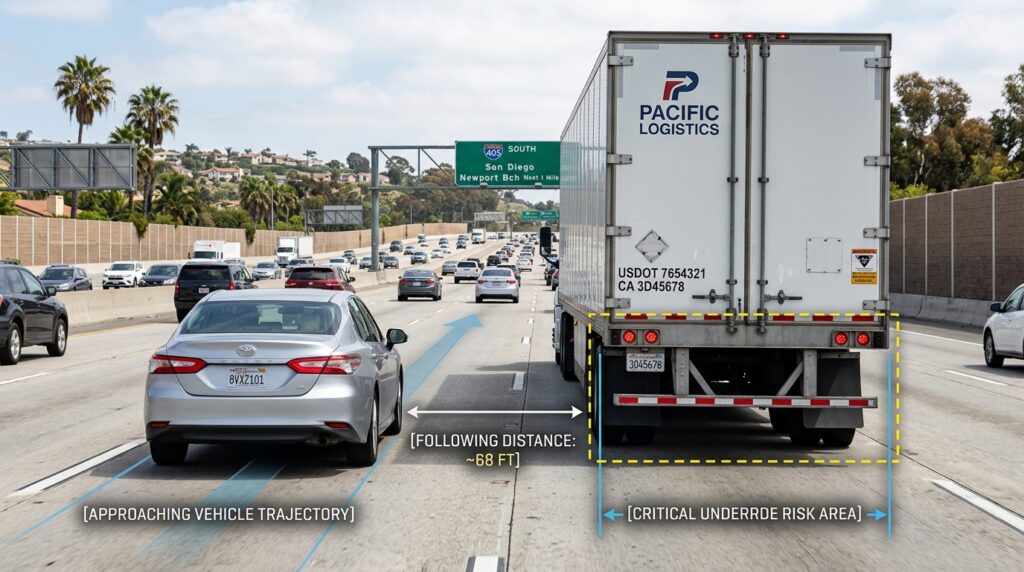
Underride guard failure truck accidents are among the most dangerous types of commercial vehicle crashes. An underride crash can happen when a smaller passenger vehicle slides under the rear or side of a large truck or trailer. Because the trailer sits higher than a car’s hood, the passenger compartment may absorb the worst part of the impact. This can lead to catastrophic injuries, permanent disability, or fatal harm.
In Orange County, underride risks may appear on busy freeway corridors, warehouse routes, construction zones, delivery areas, and major commuter roads. A passenger vehicle may strike the rear of a stopped or slow-moving trailer in traffic. Another vehicle may be forced toward the side of a trailer during a lane-change crash. A truck may be parked or backing near a loading area with poor visibility. In each situation, the condition and design of the truck’s safety equipment can become a major legal issue.
Underride guards are designed to reduce the chance that a smaller vehicle will slide underneath a large trailer. However, not every crash is prevented. A guard may be damaged, poorly maintained, too weak, improperly installed, missing, or unable to withstand the specific angle of impact. When that happens, the case may involve more than ordinary driver negligence. It may involve maintenance failures, inspection problems, equipment defects, trailer ownership issues, or broader company safety practices.
This article explains how underride guard failure truck accidents happen, what evidence may matter, and why these claims require a careful investigation.
Why Underride Guard Failure Truck Accidents Are So Severe
A normal passenger vehicle is built with crash protection systems such as airbags, seat belts, crumple zones, reinforced frames, and roof supports. These systems work best when the vehicle absorbs impact at the proper height and angle. In an underride crash, the passenger vehicle may slide under the trailer before those protective systems can work as intended.
That is why underride crashes can cause extreme injuries even at speeds that may not seem unusually high. The impact may involve the windshield, roof, upper frame, or passenger compartment instead of the front bumper and engine area. Victims may suffer traumatic brain injuries, spinal cord injuries, facial trauma, neck injuries, internal injuries, amputations, fractures, and other life-changing harm.
Rear underride versus side underride crashes
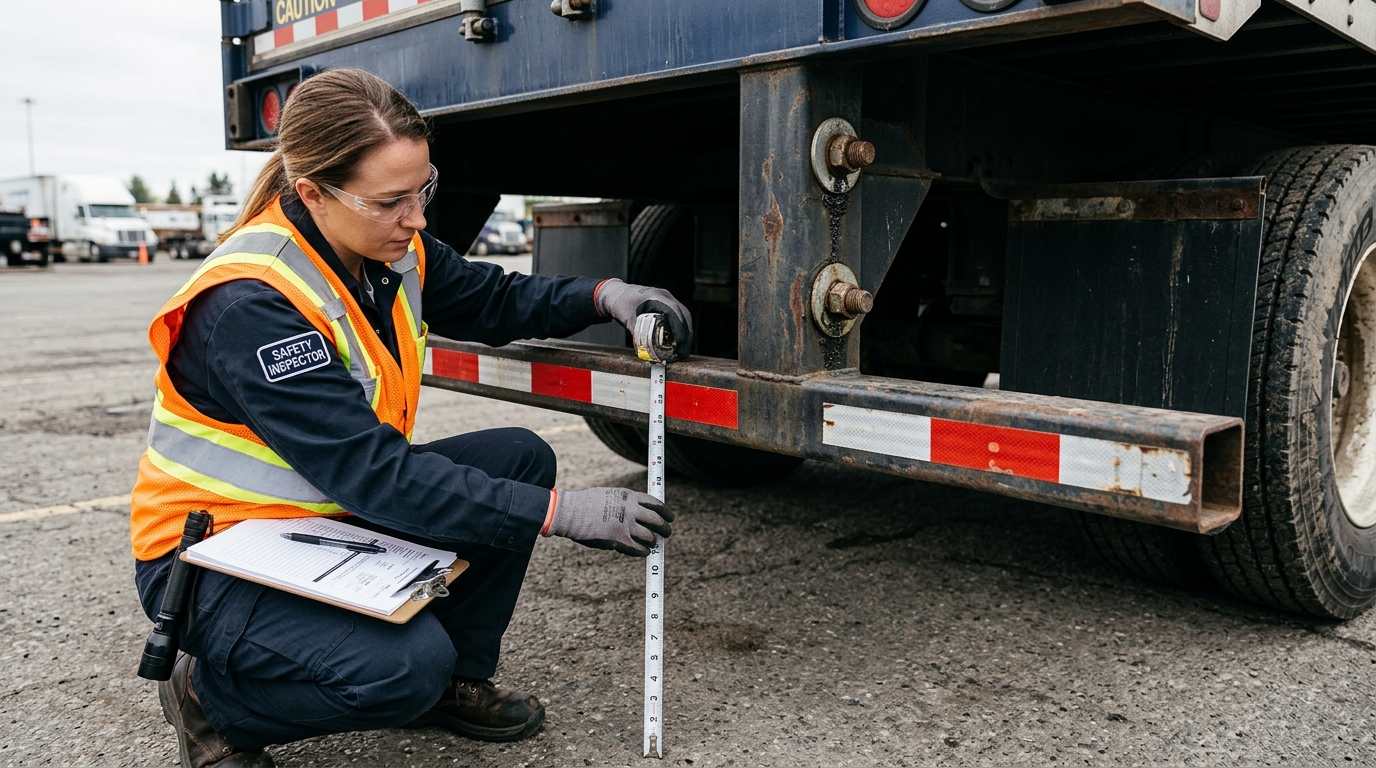
Rear underride crashes usually happen when a passenger vehicle strikes the back of a truck or trailer. This may occur when traffic slows suddenly, a trailer is stopped on the shoulder, a truck backs into a travel lane, or a commercial vehicle lacks proper lighting and reflective markings. A rear underride guard is meant to act as a barrier between the passenger vehicle and the trailer.
Side underride crashes happen when a passenger vehicle slides under the side of a trailer. These crashes may occur during intersection collisions, lane changes, wide turns, jackknife events, parking lot crashes, or crashes involving a trailer crossing traffic. Side underride protection has received increased safety attention because the side of a trailer can leave a large open space between the wheels.
For official background, the National Highway Traffic Safety Administration provides information and research about truck underride safety. NHTSA’s materials are useful because they explain how underride crashes are studied and why rear and side protection remain important safety topics.
Why vehicle height mismatch matters
The biggest danger in an underride crash is height mismatch. A semi-trailer may sit much higher than the front structure of a sedan, compact car, SUV, or small crossover. If the trailer’s guard does not stop the smaller vehicle, the car can travel underneath the trailer body. The result may be severe intrusion into the occupant space.
This issue becomes even more dangerous at night, in rain, in heavy traffic, or near construction zones. If a trailer has poor reflective tape, broken lights, missing hazard signals, or no warning markers, a driver may have less time to react. The crash may still require a full investigation because several parties could share responsibility.
Why guard condition matters after impact
After a serious crash, the condition of the underride guard should be documented immediately. Investigators may need photos of the guard, bolts, welds, brackets, reflective tape, damage pattern, height, width, deformation, corrosion, and attachment points. A guard that appears damaged after the crash may have failed during the collision, but it may also have been weakened before impact.
This is why preserving the truck and trailer is critical. If the trailer is repaired, moved, sold, or scrapped too quickly, important evidence may disappear. A preservation letter may be needed to stop the trucking company, trailer owner, insurer, or maintenance provider from altering evidence before an expert can inspect it.
How underride guard failure can affect liability
Liability in a truck accident case can involve several parties. The truck driver may be responsible if unsafe driving caused the crash. The trucking company may be responsible if it failed to inspect, maintain, or repair the vehicle. A trailer owner may be involved if a rented or leased trailer had defective safety equipment. A maintenance provider may be liable if it missed a dangerous condition. A manufacturer may become relevant if a guard or trailer component was defectively designed or built.
This is why understanding liability in truck accident cases is so important. A serious underride crash is rarely just about the final seconds before impact. The case may require months of inspection records, repair documents, driver reports, company safety policies, and trailer ownership records.
The Insurance Institute for Highway Safety also provides public information on truck underride guard ratings. IIHS testing and safety research can help explain why stronger guards and real-world crash performance matter.
Evidence that may show preventable equipment failure
Useful evidence may include pre-trip inspection reports, annual inspection records, maintenance logs, repair invoices, driver vehicle inspection reports, photos from before the crash, trailer assignment records, ownership documents, telematics data, police reports, crash reconstruction analysis, and witness statements. If the truck had cameras, video footage may also show traffic conditions, lighting, vehicle movement, and whether the trailer was stopped or moving before impact.
Evidence from nearby businesses, traffic cameras, dashcams, and warehouse cameras may also help. Your related article on surveillance cameras in truck accident investigations is a strong internal link because underride cases often depend on visual proof of how the crash happened.
How Victims Can Protect an Orange County Underride Crash Claim
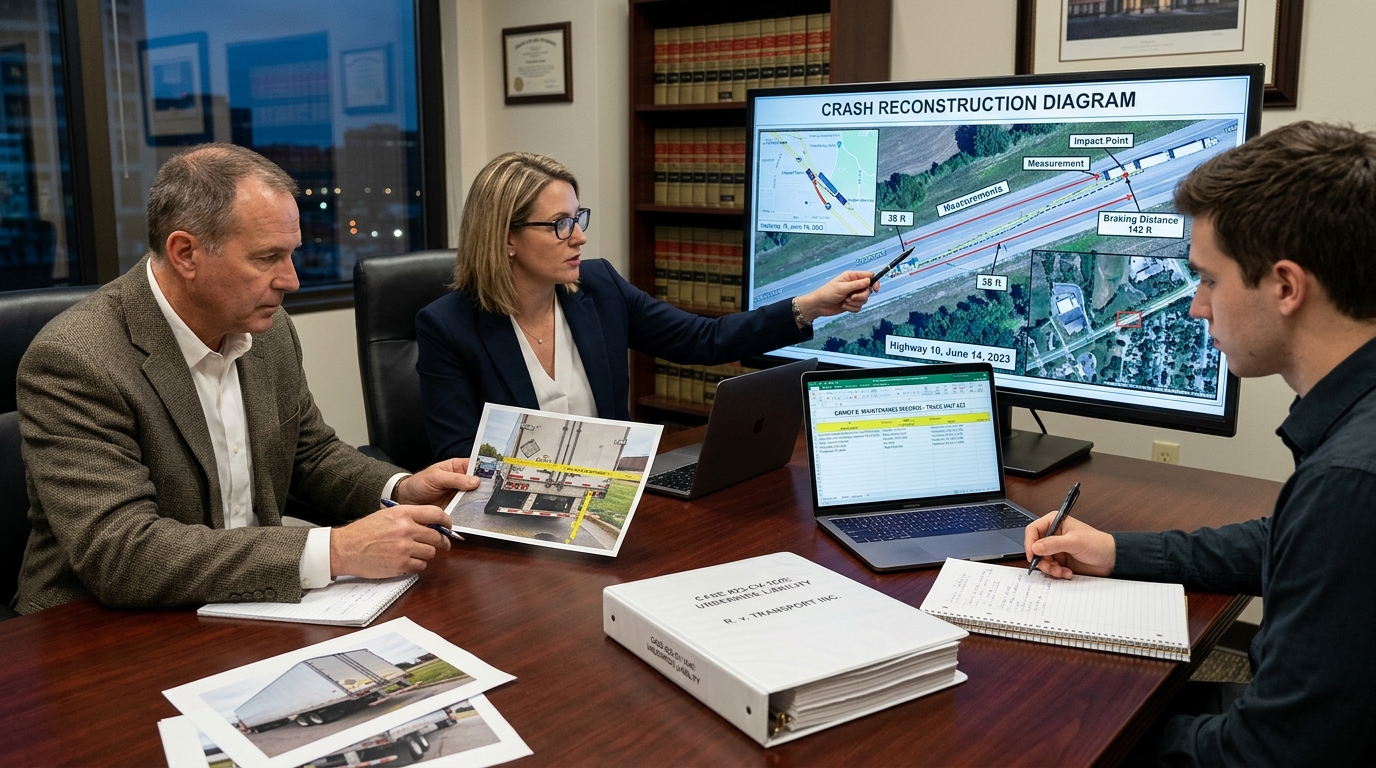
After an underride crash, victims and families should focus first on medical care and safety. These crashes can involve serious trauma, and some injuries may not be fully understood immediately. Once emergency needs are addressed, the next priority is evidence preservation. Trucking companies and insurers may move quickly after a crash. They may send investigators, collect the truck, inspect the trailer, download data, and begin shaping their defense.
Victims should avoid guessing about fault or giving detailed recorded statements before the evidence is reviewed. In underride cases, the first version of the crash may not tell the whole story. The truck may have been stopped illegally. The trailer may have had poor lighting. The guard may have been damaged before impact. The driver may have failed to use hazard lights. The company may have ignored repeated inspection problems.
Why early investigation can change the outcome
Early investigation can make a major difference because physical evidence may change quickly. The trailer may be repaired. The underride guard may be replaced. Video footage may be overwritten. Driver logs may be corrected. Dispatch records may become harder to obtain. Witnesses may forget details. Skid marks, debris fields, and roadway evidence may disappear within hours or days.
An attorney handling an underride claim may request that all relevant parties preserve the truck, trailer, guard components, photos, ELD records, GPS data, maintenance records, driver qualification files, inspection reports, dashcam footage, surveillance footage, and insurance communications. If the case involves driver fatigue or poor scheduling, internal links to truck driver fatigue accident claims in Orange County may also be useful because hours-of-service and dispatch evidence can help explain why a driver failed to react in time.
Underride guard failure truck accidents can leave victims facing long hospital stays, surgeries, rehabilitation, lost income, reduced earning capacity, emotional trauma, and permanent physical limitations. The legal claim should account for both current losses and future needs. That may include medical bills, future treatment, therapy, home modifications, lost wages, loss of earning ability, pain and suffering, and other damages allowed by law.
Why these cases should not be treated like ordinary rear-end crashes
Insurance companies may try to frame a rear underride crash as a simple rear-end collision. That is too narrow. A passenger vehicle striking the back of a trailer does not automatically answer the legal question. Investigators must look at lighting, visibility, traffic flow, guard condition, trailer placement, driver behavior, maintenance records, and whether the truck or trailer created an unreasonable hazard.
Underride crashes are different because the injuries are often severe and the evidence may involve both driver conduct and vehicle safety equipment. A proper investigation can reveal whether the crash was preventable and whether more than one party should be held responsible.
General information only. This article is for educational purposes and is not legal advice. Truck accident claims depend on specific facts, deadlines, evidence, and applicable law. Speak with a licensed attorney about a specific Orange County truck accident case.