
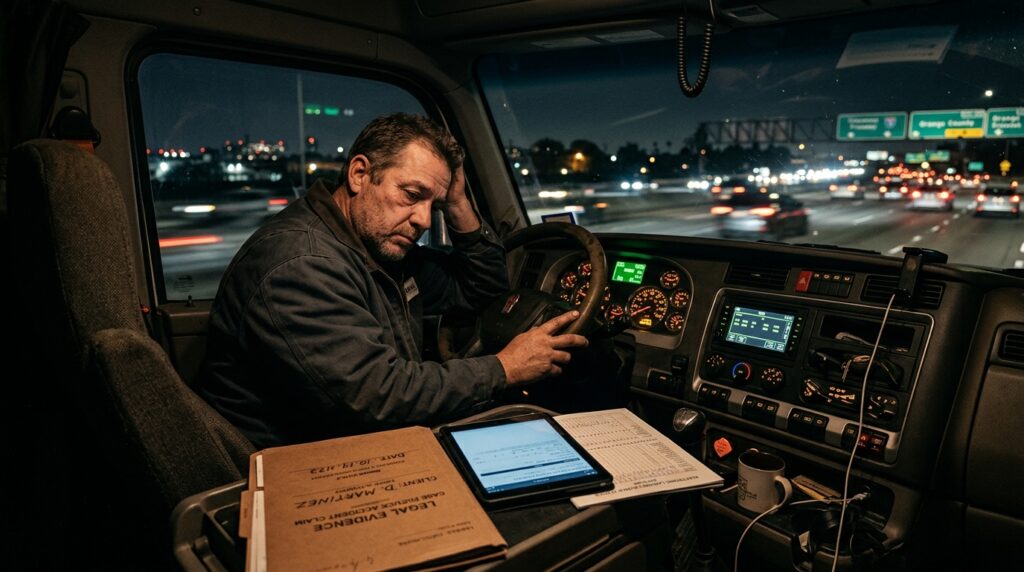
Truck driver fatigue accident claims can become some of the most important injury cases in Orange County because tired commercial drivers can cause devastating crashes. A fatigued truck driver may react too slowly, drift between lanes, miss stopped traffic, brake late, follow too closely, or make poor decisions near freeway exits and construction zones. When the vehicle involved is a semi-truck, tractor-trailer, box truck, delivery truck, or other commercial vehicle, one tired decision can change a victim’s life in seconds.
Fatigue is not always obvious at the crash scene. A driver may not admit they were exhausted. The police report may focus only on the impact point. An insurance adjuster may call the crash a simple rear-end collision or lane-change accident. However, truck driver fatigue accident claims often require a deeper investigation into hours of service, electronic logging devices, dispatch pressure, delivery schedules, inspection records, and company safety practices.
In Orange County, this issue matters because commercial vehicles regularly move through busy freeway corridors, including I-5, I-405, SR-55, SR-57, and SR-91. Heavy traffic, tight schedules, port-related freight movement, warehouse routes, and stop-and-go congestion can all increase the danger when a tired driver stays behind the wheel too long.
Why Truck Driver Fatigue Accident Claims Require Deeper Evidence
A serious truck crash rarely tells the whole story at first glance. The driver may say traffic stopped suddenly. The trucking company may blame another vehicle. The insurer may argue that the victim could have avoided the crash. These explanations may sound simple, but they can leave out the most important question: why did the truck driver fail to react safely?
Fatigue can reduce attention, slow reaction time, weaken judgment, and increase the chance of lane drift or delayed braking. A tired driver may look awake in a photo or speak normally after the crash. That does not mean fatigue played no role. The real answer often appears in records created before the collision, not in the driver’s first statement afterward.
The Federal Motor Carrier Safety Administration explains that Hours of Service rules limit how long commercial drivers may stay on duty and how much rest they need. These rules aim to help drivers stay awake and alert while operating commercial motor vehicles. For official background, readers can review the FMCSA Hours of Service resource.
Hours of Service rules can shape the claim

Hours of Service rules matter because they create a framework for reviewing the driver’s workday. A commercial driver may have legal limits on driving time, on-duty time, rest breaks, and weekly work totals. If the driver exceeded those limits or worked near the maximum for several days, fatigue may become a major issue in the claim.
Still, a legal-looking log does not always end the investigation. A driver may technically stay within a limit but still operate while dangerously tired. Long loading delays, overnight driving, poor sleep, early dispatch times, traffic congestion, and pressure to meet delivery windows can all affect alertness.
This is why victims should not accept a trucking company’s summary at face value. The full record may show a pattern that a short report misses.
ELD and GPS data can reveal the real timeline
Electronic logging devices, or ELDs, can help show when the truck moved, when the driver stopped, how long the driver operated, and whether required rest periods appear in the records. GPS data, fuel receipts, toll records, delivery documents, dashcam footage, and dispatch messages can support or challenge the ELD timeline.
If records conflict, the case may become stronger for the victim. For example, an ELD may show a stop, while GPS or fuel records suggest movement. Dispatch messages may show pressure to keep driving. Dashcam video may reveal late braking or lane drift. Your related article on ELD truck accident evidence in Orange County is a strong internal link for this section.
Dispatch pressure can point beyond the driver
A fatigue claim may involve more than one tired driver. The trucking company, dispatcher, broker, shipper, or logistics coordinator may have contributed to the unsafe situation. If a company creates unrealistic delivery windows or ignores warning signs in driver records, the claim may expand beyond ordinary driver negligence.
Dispatch records can show whether the driver received messages about deadlines, delays, rerouting, pickups, drop-offs, or customer pressure. A company may not directly say, “Break the rules.” However, repeated pressure to meet impossible timing can still matter when a crash follows.
Fatigue signs may appear in the crash pattern
Truck driver fatigue accident claims often involve crash patterns that deserve closer review. Rear-end crashes, lane departures, freeway shoulder impacts, drifting collisions, missed traffic slowdowns, and late-braking crashes can all raise fatigue questions. A tired driver may fail to recognize danger until there is no safe stopping distance left.
Orange County traffic can make that risk worse. A commercial vehicle moving through congestion near freeway interchanges needs constant attention. When traffic speed changes quickly, a rested driver may brake in time. A fatigued driver may need just one extra second too long.
Scene evidence can help connect fatigue to the crash. Skid marks, impact angle, vehicle damage, dashcam footage, event data, witness statements, and road conditions may show whether the truck driver reacted late or failed to react at all.
Orange County freeway congestion can expose fatigue
Congested corridors can reveal whether a truck driver was alert. Stop-and-go traffic demands repeated scanning, controlled following distance, smooth braking, and patience. A tired driver may tailgate without noticing, miss brake lights ahead, or make unsafe lane changes to recover lost time.
Crashes near ramps, construction zones, merges, delivery entrances, and warehouse routes need careful investigation. These locations often involve sudden speed changes and limited space. Your internal article on how to prove fault in a truck accident in Orange County supports this point because fault often depends on evidence beyond the driver’s statement.
How Victims Can Protect Evidence After a Fatigue-Related Truck Crash
Victims should treat truck driver fatigue as an evidence issue, not a guess. Saying “the driver looked tired” may help, but it will not prove the claim by itself. Strong fatigue cases use records, timelines, medical proof, company documents, and crash reconstruction to show what happened.
The first priority is medical care. Truck crashes can cause traumatic brain injuries, spinal injuries, fractures, internal injuries, shoulder injuries, knee injuries, nerve pain, and long-term mobility problems. Some symptoms appear immediately. Others develop after the shock wears off. Medical documentation helps connect the crash to the injuries and gives the claim a stronger foundation.
After health and safety, evidence preservation becomes critical. Trucking companies may repair vehicles, move equipment, overwrite camera footage, replace ELD records, rotate drivers, or lose dispatch records if no one acts quickly. A preservation letter can demand that important evidence remain available.
Key records can show whether fatigue caused or contributed to the crash
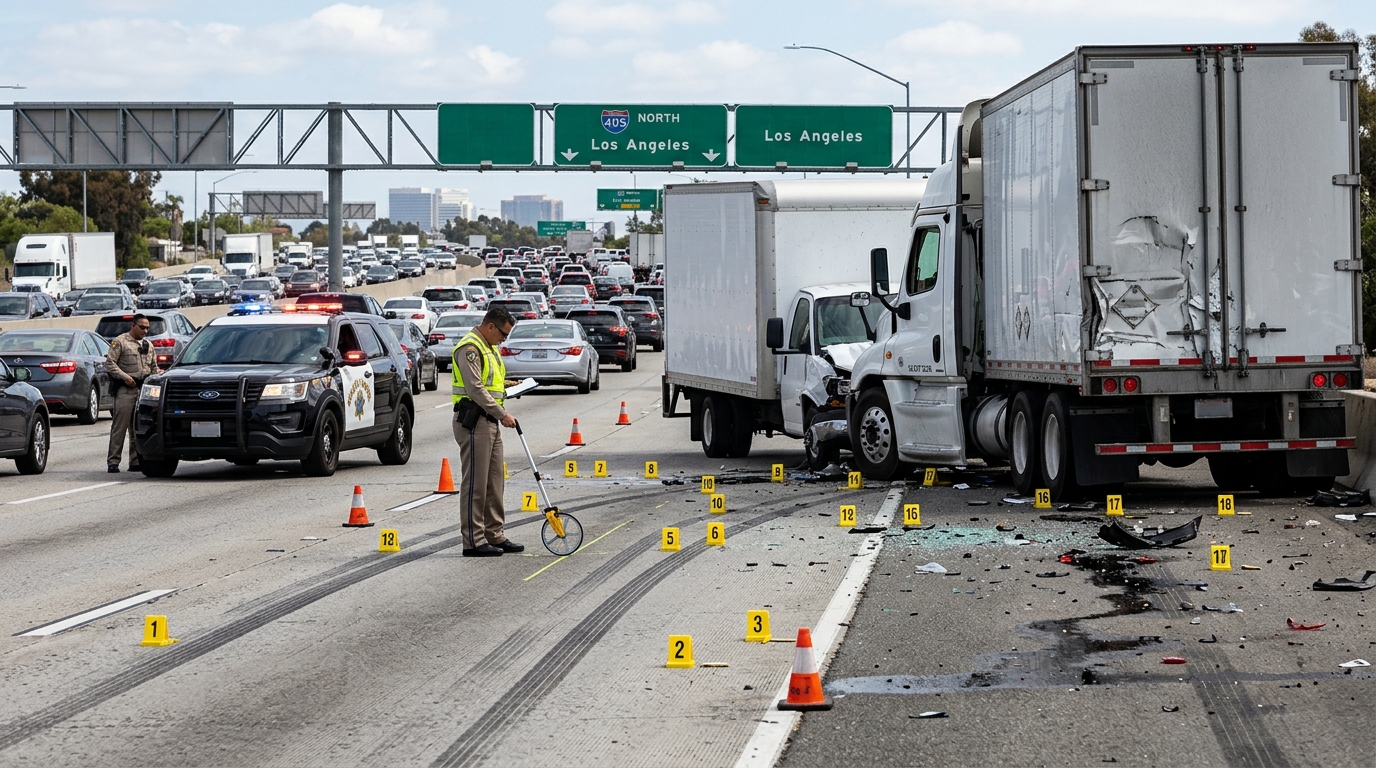
A fatigue investigation may involve ELD records, driver logs, GPS history, dispatch messages, bills of lading, trip sheets, delivery schedules, fuel receipts, toll records, inspection reports, maintenance files, dashcam video, cell phone records, driver qualification files, and company safety policies. Each record can answer a different question.
Driver logs may show hours worked. Dispatch records may show schedule pressure. GPS data may show speeding, route changes, or skipped rest. Inspection records may reveal whether the company maintained the truck properly. Dashcam footage may show late braking, lane drift, distraction, or following distance.
The strongest cases compare these records together. A single document may not prove fatigue, but several matching details can create a powerful timeline.
Medical proof still matters as much as truck data
Even strong fatigue evidence will not complete the claim without medical proof. Victims should attend appointments, follow treatment instructions, save bills, keep therapy records, track symptoms, and document missed work. Insurance companies may accept that a crash happened but still dispute the seriousness of the injury.
Medical records can show pain levels, diagnosis, treatment, work restrictions, physical limitations, future care needs, and long-term effects. Employment records, wage documents, family statements, and daily pain notes can also support damages.
Truck driver fatigue accident claims may also connect with other existing topics on your site. A fatigue case may involve poor training, weak supervision, bad inspection practices, or missing video. Useful internal resources include FMCSA’s 2026 CDL school crackdown and truck accident claims, surveillance cameras in truck accident investigations, and understanding liability in truck accident cases.
The main lesson is simple: fatigue is often hidden until someone investigates the records. A truck driver may look fine after the crash, and a trucking company may offer a clean explanation. That does not mean the explanation is complete.
Victims should act quickly after a serious Orange County truck crash. Get medical care, photograph the scene, save witness information, avoid rushed insurance statements, and make sure electronic records receive attention before they disappear. When HOS, ELD, dispatch, GPS, and medical evidence work together, truck driver fatigue accident claims can reveal the full story behind a preventable collision.
General information only. This article is for educational purposes and is not legal advice. Laws, evidence rules, insurance procedures, and deadlines vary by case and location. Speak with a licensed attorney about a specific truck accident claim.