
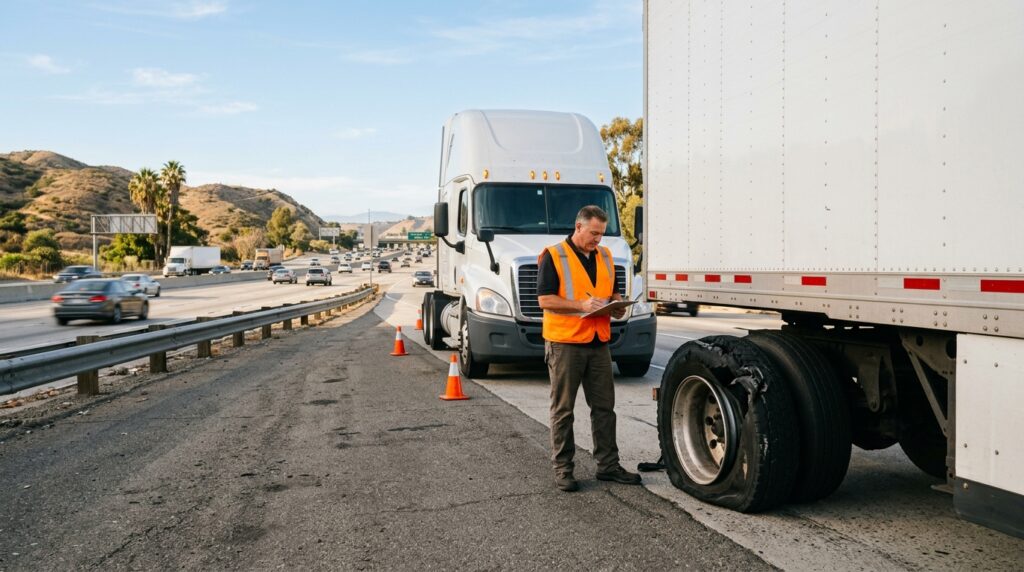
Truck tire blowout accident claims in Orange County can become serious injury cases because one failed tire can turn a commercial vehicle into an immediate freeway hazard. A semi-truck, box truck, delivery truck, or tractor-trailer does not need to strike another vehicle directly to cause harm. A blowout can make the truck drift, swerve, jackknife, spill cargo, block lanes, or trigger a chain-reaction crash in fast-moving traffic.
This issue matters in 2026 because Orange County roads carry heavy commercial traffic every day. Trucks move through I-5, I-405, SR-55, SR-57, SR-91, warehouse routes, construction zones, delivery corridors, and port-connected freight lanes. When a tire fails on a crowded freeway, drivers nearby may have only seconds to react.
Many people assume tire blowouts are random accidents. Sometimes road debris or unavoidable hazards may play a role. However, many truck tire failures deserve a deeper investigation. Worn tread, underinflation, overloading, poor inspections, ignored warning signs, improper repairs, defective tires, and weak fleet maintenance practices can all matter after a crash. For victims, the key question is not only “which tire failed?” The better question is “why was that tire allowed on the road?”
This article explains how truck tire blowout accident claims work, what evidence may prove liability, and why maintenance records should be preserved quickly after an Orange County commercial vehicle crash. This content is for general educational purposes only and is not legal advice.
Why Truck Tire Blowouts Can Cause Serious Orange County Crashes
A commercial truck tire carries far more weight and stress than an ordinary passenger vehicle tire. When it fails, the result can be violent. The driver may lose control, the truck may pull sharply to one side, and shredded tire debris may fly into nearby lanes. If the truck is hauling cargo, the sudden movement may also cause the load to shift or spill.
Orange County traffic can make the danger worse. Freeway congestion, sudden braking, short merge areas, construction work, delivery traffic, and high-speed lane changes leave little room for error. A tire blowout near an interchange or exit ramp can quickly affect several vehicles.
The official FMCSA tire safety guidance for commercial motor vehicles explains that tires must meet safety standards involving load restrictions, inflation pressure, and other requirements. These rules matter because tire condition is not a minor detail. It can be central to proving whether a truck should have been operating at all.
How a Tire Failure Can Turn Into a Liability Dispute
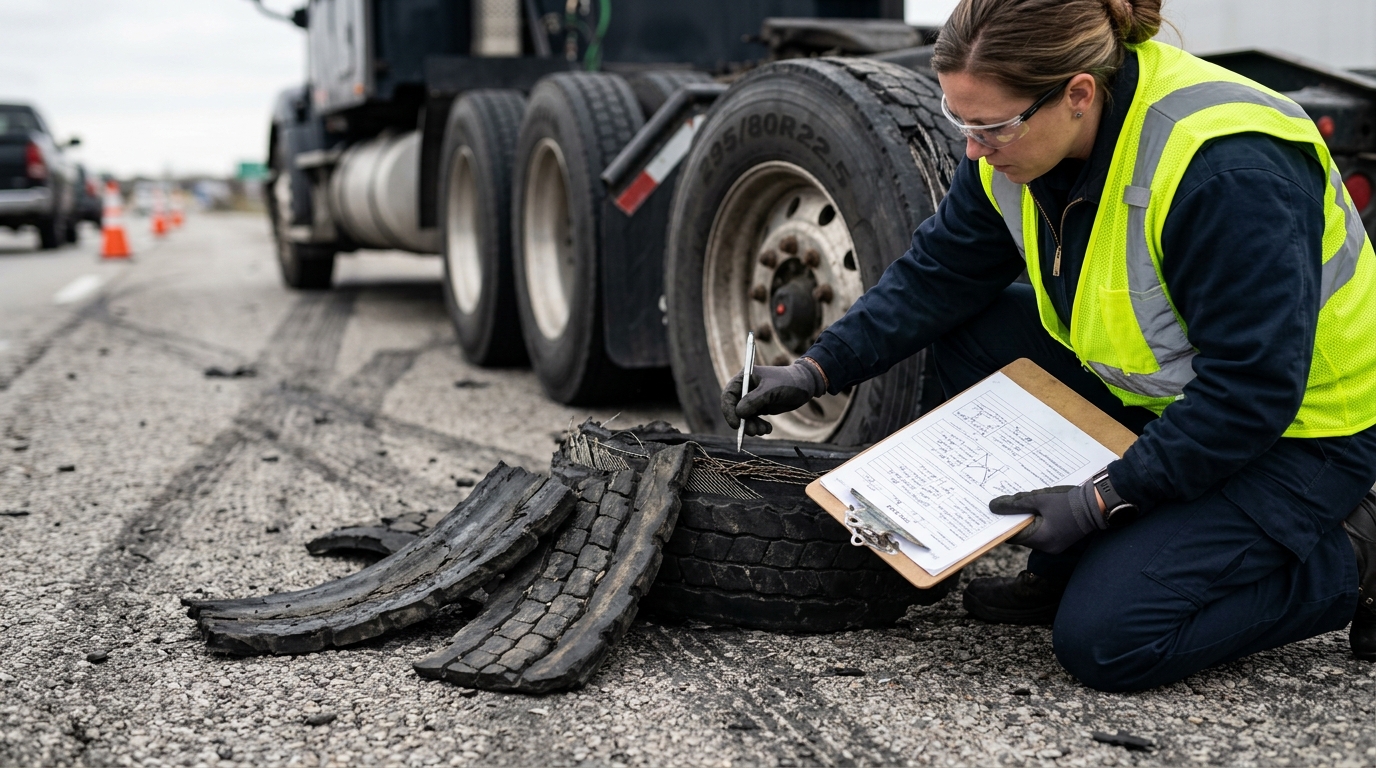
After a crash, the trucking company or insurance carrier may describe the blowout as sudden and unavoidable. That explanation may sound simple, but it should not end the investigation. A tire failure can have a long history before the final moment of impact. The tire may have been underinflated for days, overloaded beyond safe limits, patched poorly, driven too long, or ignored during inspections.
Truck tire blowout accident claims often require experts to examine the failed tire, the wheel assembly, tread separation, sidewall damage, maintenance history, trip records, and inspection reports. If the tire was discarded or the truck was repaired too quickly, important evidence may disappear.
This is why victims should act early. Your related article on truck inspection reports in truck accident cases is a natural internal link here because inspection records may show whether tire problems were documented before the crash.
Common Tire Problems That May Point to Negligence
Several tire issues may support a negligence claim. These can include worn tread, visible belt material, sidewall cracks, improper inflation, mismatched tires, poor repairs, missing valve caps, overloaded axles, retread separation, or repeated maintenance warnings that were never corrected.
A truck driver may also have failed to perform a proper pre-trip inspection. A trucking company may have failed to replace tires on schedule. A maintenance provider may have cleared a tire that should have been removed from service. A shipper or loader may have contributed by overloading the truck or distributing weight improperly.
When these facts are documented, a case may expand beyond the driver. The motor carrier, maintenance contractor, tire service company, cargo loader, shipper, or tire manufacturer may all need to be reviewed.
Why Summer Heat Can Make Tire Evidence More Important
Heat can make tire condition even more important. Hot pavement, long driving hours, heavy loads, and improper pressure can all increase stress on tires. This does not mean every hot-weather blowout is automatically negligence. It does mean a company should take tire condition seriously before putting a commercial vehicle on the road.
For Orange County claims, summer tire failures should be investigated carefully. Maintenance logs may show whether the fleet increased inspections during hotter months. Driver inspection reports may show whether pressure or tread concerns were ignored. Repair invoices may show whether the same tire position had repeated issues before the crash.
If the case also involves a spill or shifting freight, your article on cargo securement failure truck accidents in Orange County can support the discussion. A blowout and unstable cargo can become connected issues when the crash pattern shows loss of control.
What Evidence Can Prove a Truck Tire Blowout Claim?
Strong truck tire blowout accident claims are built on evidence, not assumptions. A victim may know that a tire blew, but proving why it failed requires records and expert review. The trucking company may control many of the most important documents. That is why early preservation matters.
Important evidence may include the failed tire, photographs of tread pieces, dashcam footage, police reports, inspection records, maintenance files, driver logs, weight tickets, load documents, repair invoices, telematics, event data, and witness statements. The more complete the timeline, the harder it becomes for an insurer to reduce the crash to a vague “road hazard” explanation.
Maintenance Records Can Reveal the History Behind the Blowout
Maintenance records can show whether the tire had prior problems. They may identify previous repairs, recurring pressure loss, alignment issues, tire rotation history, replacement timing, and complaints from drivers. If a company knew a tire was unsafe but kept the truck in service, those records can become powerful evidence.
Inspection reports also matter. Drivers are expected to check important safety items before trips, and tire condition is one of the most obvious concerns. If inspection forms were blank, rushed, copied, or inconsistent with the actual condition of the truck, that may raise questions about company safety practices.
This connects directly with your internal article on how to prove fault in a truck accident in Orange County. Tire cases often require the same strategy: preserve the physical evidence, compare the records, and identify every party that may have contributed to the crash.
Why the Failed Tire Should Be Preserved

The failed tire itself may be one of the most important pieces of evidence. A tire expert may be able to examine tread separation, puncture marks, impact damage, age, wear patterns, repair history, and manufacturing defects. Photos help, but they are not always enough. The actual tire can tell a more complete story.
If the trucking company repairs the vehicle and discards the tire, the victim may lose critical proof. A preservation letter can demand that the truck, tire, wheel assembly, inspection records, electronic data, and related maintenance files be kept available. This should happen as early as possible after a serious crash.
Victims should also photograph visible tire debris, roadway marks, vehicle damage, and the final resting positions of the vehicles if it is safe to do so. Your guide on what to do after a truck accident in Orange County is a useful internal link for this step because early actions can affect the strength of the claim.
Who May Be Liable After a Truck Tire Blowout?
Liability depends on the facts. The truck driver may be responsible if they ignored obvious tire problems, failed to inspect the vehicle, kept driving after warning signs, or operated too fast for the conditions. The trucking company may be responsible if it failed to maintain the vehicle, pushed unsafe schedules, ignored inspection reports, or allowed a dangerous tire to remain in service.
A maintenance company may be liable if it performed poor repairs or failed to identify a dangerous tire. A tire manufacturer may be involved if a defect contributed to the failure. A shipper, cargo loader, or logistics company may also be reviewed if overloading or poor weight distribution increased tire stress.
Your article on understanding liability in truck accident cases is relevant because tire blowout claims often involve multiple parties. The driver may be only one part of the investigation.
How Victims Can Protect Their Claim After a Tire Blowout Crash
After a serious truck tire blowout crash, victims should focus first on medical care and safety. Injuries from these crashes can involve traumatic brain injury, neck and back trauma, fractures, shoulder injuries, knee injuries, internal injuries, burns, or long-term pain. Some symptoms may appear hours or days later, so medical documentation matters.
Next, victims should protect evidence. Save photos, medical records, repair estimates, insurance letters, witness names, crash reports, and any video from dashcams or nearby businesses. Avoid giving a detailed recorded statement to the trucking company’s insurer before understanding the evidence. Insurance carriers may try to frame the crash as unavoidable before the tire history has been reviewed.
Truck tire blowout accident claims in Orange County can be won or lost through evidence. The failed tire, inspection records, maintenance history, load documents, and electronic data may show whether the crash was truly sudden or whether it was the result of preventable neglect. When victims act early, they have a better chance of revealing the full story behind a dangerous commercial vehicle failure.