

Heavy-truck automatic emergency braking in 2026 is becoming a more important issue in truck accident claims because safety technology is no longer just a background detail. When a serious crash happens, injured victims and their lawyers are not only asking what the driver did in the last few seconds before impact. They are also asking what safety systems were installed, whether those systems worked, whether they were ignored, and what electronic evidence the truck may now hold.
That shift matters in Orange County. Commercial truck crashes often cause severe injuries, long recovery periods, and complex insurance disputes. In many of those cases, the fight over liability now includes more than eyewitnesses and police reports. It may include onboard cameras, telematics, driver-assistance systems, maintenance records, inspection history, and evidence about whether a collision-mitigation system should have reduced the severity of the crash.
This topic fits naturally with what Truck Accident Lawyer Orange County already covers. Your blog already has posts on FMCSA’s 2026 CDL school crackdown, truck driver English proficiency, negligent truck driver training, surveillance cameras in truck accident investigations, how to prove fault, and truck inspection reports. This article expands that same evidence-driven cluster from a 2026 safety-tech angle.
Why Heavy-Truck AEB Matters More in 2026

Heavy-truck automatic emergency braking in 2026 matters because federal regulators are still actively working on this area, and trucking companies are operating in a world where advanced safety systems are getting more attention after major crashes. That does not mean every truck on the road has the same technology. It does mean the presence or absence of collision-mitigation systems can become more relevant in claim investigations.
Why this issue is growing in truck accident litigation
A few years ago, many truck accident cases focused mostly on speed, fatigue, distraction, maintenance problems, and company negligence. Those issues still matter. However, when a truck is equipped with forward-collision warning or emergency braking technology, another question appears: did the system activate, fail, or get bypassed? That question can influence how a crash gets reconstructed and how the parties argue about fault.
AEB can change the evidence picture after a crash
If a truck has collision-mitigation technology, the case may involve more digital evidence than many victims expect. Investigators may want system-event data, telematics records, dashcam footage, maintenance history, calibration records, and logs showing whether alerts were triggered before impact. A defense team may argue the system worked and the crash was unavoidable. A plaintiff may argue the truck should have had functioning safety technology, or that the company failed to maintain or preserve it properly.
The legal question is not “technology or driver”
One mistake people make is assuming this becomes a pure technology case. It usually does not. A truck crash can still involve driver error, poor training, unsafe following distance, fatigue, bad weather decisions, weak supervision, or maintenance failures. Safety technology becomes one more layer in the story, not the whole story by itself. In fact, a truck with advanced braking features can still be operated negligently if the driver was distracted, the company ignored maintenance, or the carrier allowed unsafe practices to continue.
Why Orange County victims should pay attention
Orange County has busy freeways, dense traffic patterns, and a mix of commercial delivery, regional freight, and heavy truck movement. In that environment, rear-end crashes and chain-reaction collisions can be devastating. Since AEB is aimed directly at reducing the frequency and severity of rear-end impacts, it naturally becomes relevant when a large truck strikes slowed or stopped traffic.
This is also why the topic works so well alongside your existing post on proving fault in a truck accident. Once electronic safety systems enter the case, proving fault may require more than simple witness statements. The real answer may sit in vehicle data, video, and maintenance records that disappear or get overwritten if the case is not investigated quickly.
How AEB Could Affect Liability, Evidence, and Claim Value
The biggest practical question for an injured victim is simple: how does this help my case? The answer depends on the facts, but heavy-truck automatic emergency braking in 2026 can matter in three major ways. It can affect what evidence exists, it can shape how the defense explains the crash, and it can broaden the investigation beyond the driver alone.
What records may matter most
Truck accident claims involving safety technology are evidence-heavy. The strongest cases usually combine ordinary crash proof with electronic records. Victims still need the basics, such as photos, witness names, medical records, and proof of damages. But in AEB-related cases, the deeper investigation may focus on whether the truck had the relevant technology, whether it was functioning, and whether the company preserved the digital trail after the collision.
Records that may strengthen an AEB-related claim
Depending on the truck and the fleet, useful records may include:
- event data recorder or telematics downloads
- forward-collision warning and braking-system logs
- dashcam or onboard video
- maintenance and calibration records
- inspection reports
- driver qualification and training files
- company safety policies on collision-mitigation technology
- post-crash repair or download records
These materials often matter most when viewed together. A rear-end crash plus weak maintenance records plus missing data preservation can tell a very different story than a crash report alone. That is one reason your post on truck inspection reports is such a natural internal link here. Inspection and maintenance history may help explain why a system was unreliable, uncalibrated, or not preserved properly.
How the defense may use the technology story
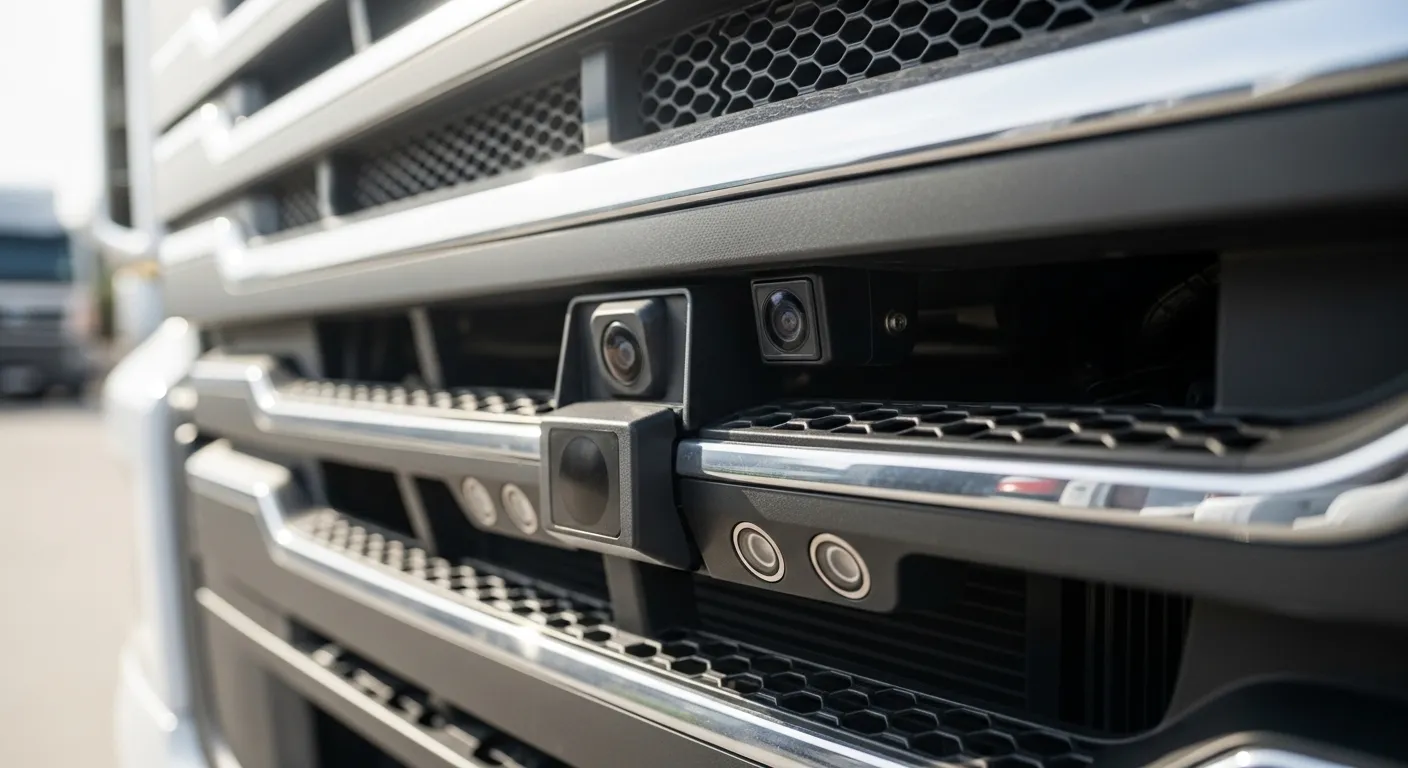
Defense lawyers usually do not ignore safety technology. They use it. If the truck had AEB or similar collision-mitigation features, the defense may argue the vehicle was responsibly equipped and that the system did everything it could. They may also argue that road conditions, traffic flow, a sudden stop, or another driver’s conduct made the impact unavoidable.
That is why these cases need careful analysis. Technology can become a shield in the wrong hands. A carrier may try to turn “we had safety features” into “we were not negligent.” But those are not the same thing. A company can still be negligent if it failed to maintain the system, train drivers on it properly, preserve the data, or enforce safe following distance and alert driving in the first place.
This point also connects well with your article on negligent truck driver training. A braking system is not a substitute for competence. If the driver misunderstood alerts, relied on the system improperly, or had poor defensive-driving habits, training may still be central to the claim.
Why broader company negligence may still matter
In serious truck accident cases, the most important liability issue is often bigger than the driver. Was the motor carrier using reasonable safety practices? Did it inspect and maintain the truck correctly? Preserve data after the crash? Supervise drivers properly? Ignore prior warning signs? Technology can actually make these company-level questions more important, not less.
That is also why your surveillance-camera article and your “what to do after a truck accident” article are useful companions. External video can help test the company’s version of events, while early action after the crash helps preserve the physical and digital evidence before it disappears.
In the end, heavy-truck automatic emergency braking in 2026 is a strong topic because it reflects where truck accident litigation is heading. Victims still need to prove fault, injuries, and damages. But now they may also need to understand how onboard systems, electronic evidence, and company safety choices affect the case. For Orange County injury claims, that means a truck crash is increasingly about both human negligence and what the technology trail shows after impact.
For an external authority link, use the official NHTSA press release on the heavy-vehicle automatic emergency braking proposed rule. It is highly relevant because it explains the federal push to require AEB on heavy vehicles to reduce rear-end crash frequency and severity.